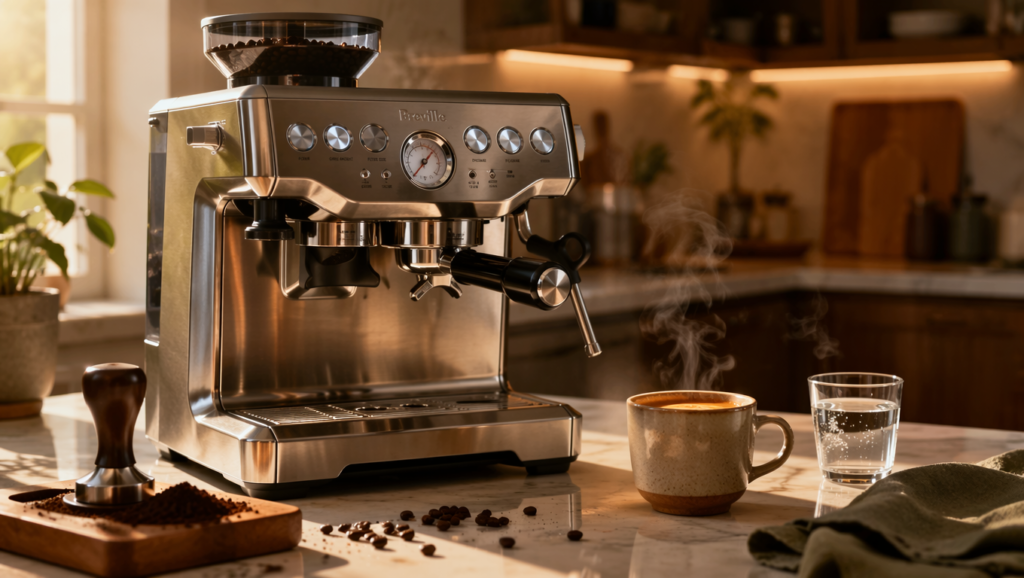
An espresso machine is a kitchen appliance designed to brew concentrated coffee by forcing pressurized hot water through finely-ground coffee beans. This process creates a small, intense shot of coffee with a rich flavor and a layer of creamy foam on top called crema. People search for espresso machines because they want to recreate the café experience at home, save money on daily coffee shop visits, and have full control over the quality and taste of their coffee.
Whether you are tired of spending five dollars on lattes every morning or you simply love the ritual of making a perfect shot, an espresso machine can transform your daily coffee routine. However, with so many options available, finding the right one can feel overwhelming. This guide breaks down everything you need to know, from the different types of machines to the key features that actually matter, so you can make a confident purchase.
What Is an Espresso Machine?
An espresso machine is a specialized coffee maker that uses high pressure, typically around 9 bars, to force hot water through tightly packed, finely ground coffee. This pressure extracts the oils and flavors from the coffee beans quickly, producing a small but powerful shot of espresso.
Unlike regular drip coffee makers that rely on gravity, espresso machines use a pump or lever system to generate the necessary pressure. The result is a concentrated beverage with a distinct flavor profile, a thicker consistency, and that signature golden-brown crema on top. Modern espresso machines come in various styles, from manual lever machines that require physical effort to fully automatic models that do almost everything for you with the push of a button.
Most home espresso machines include a portafilter, which holds the coffee grounds, a water tank or direct plumbing connection, and a heating element to maintain the correct brewing temperature. Many also feature a steam wand for frothing milk, which is essential for making cappuccinos, lattes, and other milk-based drinks.
Why People Need an Espresso Machine
The desire for an espresso machine often stems from a few common pain points. First, there is the cost factor. If you buy a latte every weekday, you could easily spend over a thousand dollars a year. An espresso machine allows you to make that same drink at home for a fraction of the cost.
Second, there is the issue of convenience. Running to a coffee shop before work is time-consuming, and the quality can vary depending on the barista. Having your own machine means you can enjoy a consistent, high-quality espresso whenever you want, without leaving your kitchen.
Third, many coffee lovers enjoy the process of making espresso. It is a ritual that involves grinding beans, tamping the grounds, and watching the shot pour. For these people, an espresso machine is not just an appliance, it is a tool for a rewarding hobby.
Additionally, the ability to customize your drink is a major draw. With an espresso machine, you can control the grind size, the water temperature, and the extraction time, allowing you to fine-tune your coffee exactly to your taste. You can also experiment with different beans and milk types to create unique beverages.
Key Features Breakdown
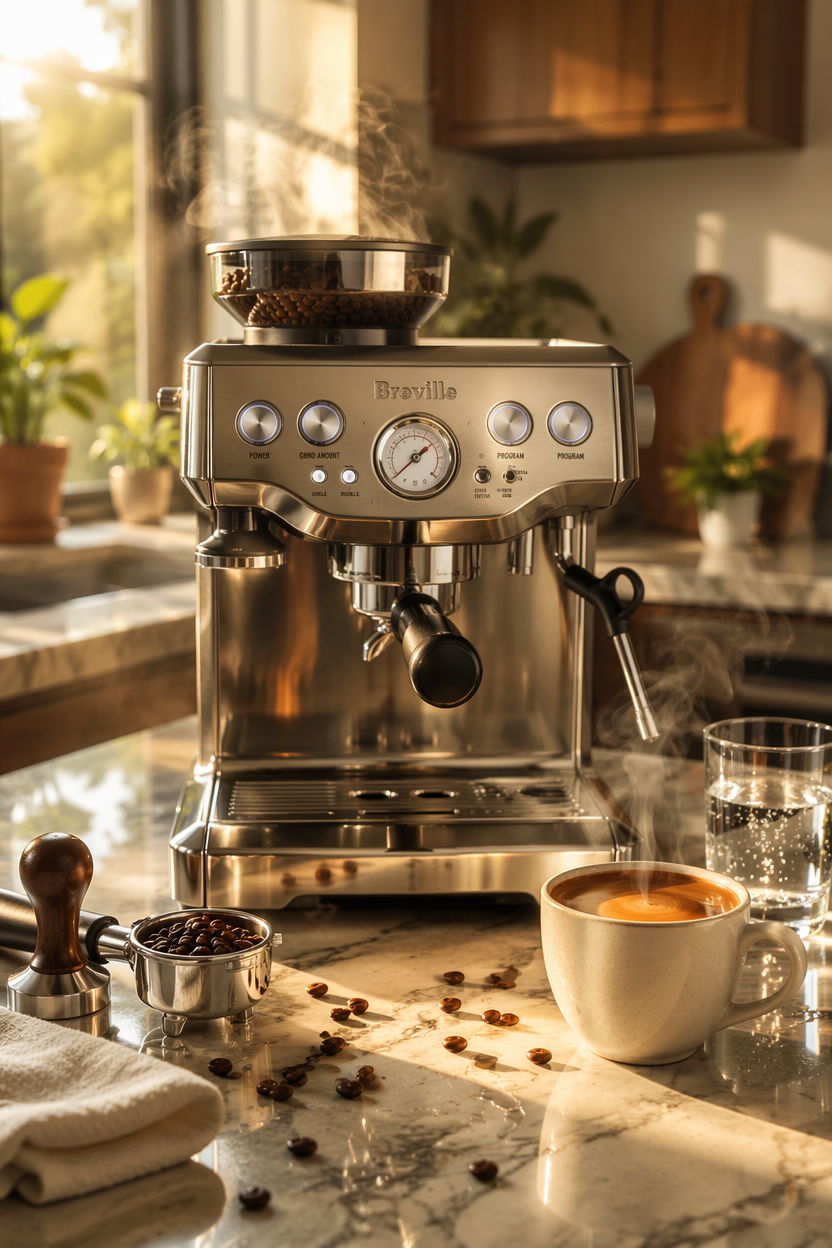
When shopping for an espresso machine, it helps to understand the features that impact performance and ease of use. Here are the most important ones to consider.
Type of Machine
Espresso machines fall into four main categories: manual, semi-automatic, automatic, and super-automatic.
- Manual machines require you to operate a lever to generate pressure. They offer the most control but have the steepest learning curve.
- Semi-automatic machines use a pump for pressure, but you control when to start and stop the shot. They are the most popular choice for home users because they balance control and convenience.
- Automatic machines control the shot timing for you, but you still need to grind and tamp the coffee.
- Super-automatic machines handle everything from grinding to brewing to cleaning. They are the easiest to use but often come with a higher price tag.
Boiler System
The boiler heats the water for brewing and steaming. Machines can have a single boiler, a heat exchanger, or dual boilers. Dual boilers allow you to brew and steam simultaneously, which is ideal for making milk-based drinks quickly. However, for most home users, a single boiler or heat exchanger is perfectly adequate.
Pressure
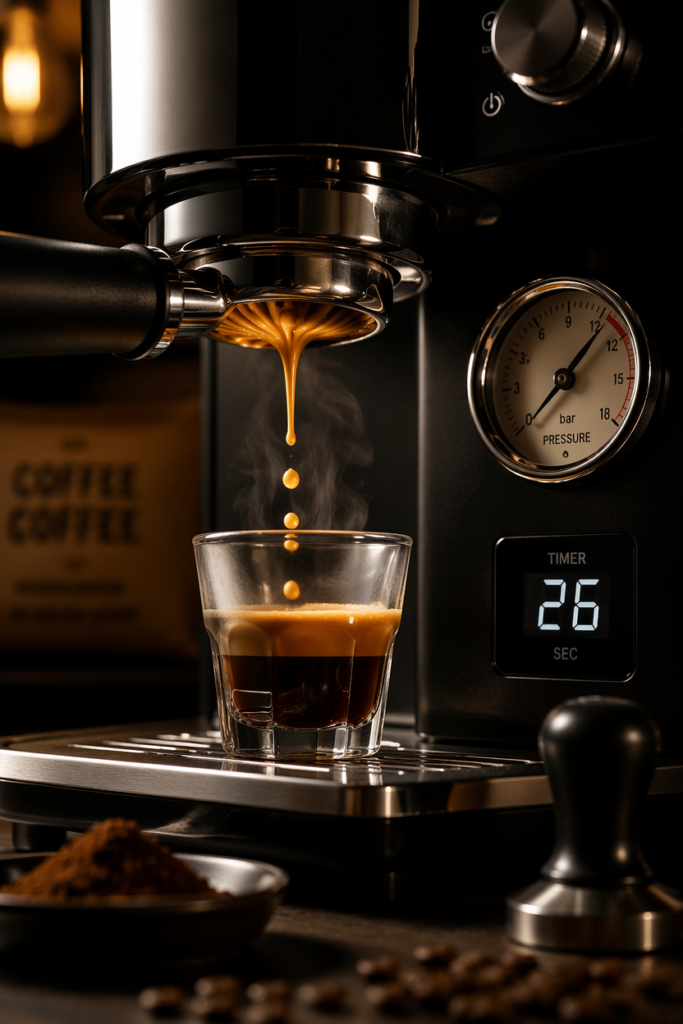
The standard brewing pressure for espresso is 9 bars. While some machines advertise 15 or even 20 bars, this does not necessarily mean better espresso. In fact, too much pressure can lead to over-extraction and bitter coffee. Look for a machine that can maintain a consistent 9-bar pressure for the best results.
Grinder
Some machines come with a built-in grinder, which is a significant convenience. Having a grinder built-in means one less appliance on your counter and fresher coffee, as you can grind beans just before brewing. However, built-in grinders can be harder to clean and may not offer the same grind quality as a separate high-end grinder.
Steam Wand
If you enjoy lattes or cappuccinos, a good steam wand is essential. Look for a wand that produces dry, powerful steam and has a frothing attachment. Some machines feature an automatic milk frother, which takes the guesswork out of steaming milk.
PID Controller
A PID (Proportional-Integral-Derivative) controller is a feature that maintains precise water temperature. Temperature stability is crucial for consistent extraction, and a PID controller ensures your machine stays at the optimal temperature throughout the brewing process.
Water Tank
Consider the size of the water tank. A larger tank means fewer refills, which is convenient if you make multiple drinks a day. Also, check if the tank is removable for easy cleaning and filling.
Programmability
Some machines allow you to program shot volumes and save your preferred settings. This is a handy feature if multiple people in your household use the machine and have different preferences.
Real-Life Benefits of Owning an Espresso Machine
Owning an espresso machine brings tangible benefits to your daily life. One of the most obvious is the money you save. A typical latte from a coffee shop costs around five dollars. If you make one at home, each drink costs about one dollar in ingredients. Over a year, that adds up to significant savings.
Another benefit is the quality of the coffee. When you make espresso at home, you control every variable. You can choose high-quality beans, adjust the grind to perfection, and pull the shot exactly how you like it. The result is often better than what you get at many coffee shops.
There is also the social aspect. An espresso machine can become the centerpiece of your kitchen, a conversation starter when guests visit. Making coffee for friends and family is a warm, welcoming gesture that many people appreciate.
Moreover, the process of making espresso can be therapeutic. It requires focus and attention, which can be a calming break in a busy day. For many, the ritual of grinding, tamping, and brewing is as enjoyable as drinking the final product.
Finally, having an espresso machine at home gives you the freedom to experiment. You can try different beans from around the world, test various brewing techniques, and create your own signature drinks. This creative aspect adds a layer of fun to your coffee routine.
Step-by-Step Usage Guide for an Espresso Machine
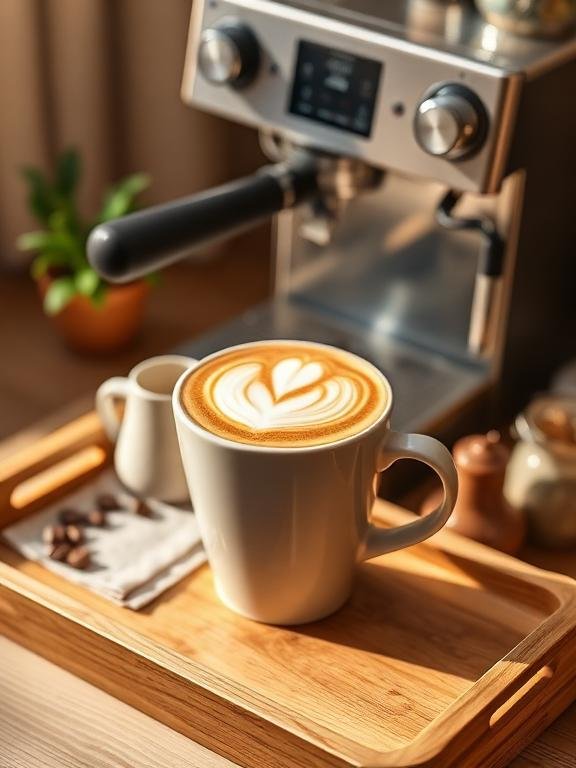
Using an espresso machine properly is essential for getting the best results. Follow these steps to pull a perfect shot every time.
Step 1: Preheat the Machine
Turn on your espresso machine and let it warm up for at least 15 to 20 minutes. A properly heated machine ensures stable water temperature, which is crucial for proper extraction.
Step 2: Grind the Beans
If your machine has a built-in grinder, set it to a fine grind setting. If you are using a separate grinder, grind the beans just before brewing. The grind should be fine, like table salt, but not powdery. The right grind size is one of the most important factors for a good shot.
Step 3: Dose the Coffee
Place the portafilter on a scale or use the dosing tool to measure the right amount of coffee. A typical dose is around 18 to 20 grams for a double shot. Consistency is key, so try to use the same dose every time.
Step 4: Distribute and Tamp
Distribute the grounds evenly in the portafilter basket, then tamp firmly with a tamper. Apply steady, even pressure to create a flat, level puck. This ensures water flows through the coffee evenly.
Step 5: Purge the Group Head
Run a short burst of water through the group head without the portafilter. This clears any old coffee residue and helps stabilize the temperature.
Step 6: Insert the Portafilter
Lock the portafilter into the group head. Make sure it is snug but not overly tight.
Step 7: Start the Extraction
Start the brew cycle immediately after locking in the portafilter. A good shot should take about 25 to 30 seconds to yield around 36 grams of liquid. The espresso should flow like warm honey and have a rich, golden crema on top.
Step 8: Stop the Shot
Stop the extraction at the desired yield. If your machine is automatic, it will stop for you. If it is semi-automatic, you will need to press the stop button.
Step 9: Steam the Milk (Optional)
If you are making a latte or cappuccino, steam your milk. Purge the steam wand, then immerse it just below the surface of the milk in a pitcher. Turn on the steam and position the wand to create a vortex, incorporating air to create microfoam. Heat the milk to around 150°F.
Step 10: Clean Up
Remove the portafilter and knock out the used coffee puck. Wipe the group head and steam wand with a damp cloth. Run a cleaning cycle through the machine if recommended by the manufacturer.
Best Product Recommendations
Here are five top-rated espresso machines that cater to different budgets and skill levels.
1. Breville Barista Pro
The Breville Barista Pro is a semi-automatic machine with a built-in grinder. It features a ThermoJet heating system that reaches the optimal brewing temperature in just three seconds, so you do not have to wait long to make your coffee. The machine has 30 grind settings, allowing you to dial in the perfect grind for your beans. It also includes a steam wand for frothing milk and a digital display that shows the extraction time. The Barista Pro is an excellent all-in-one solution for people who want café-quality espresso without taking up too much counter space.
Best for: People who want a high-quality, all-in-one machine with fast heat-up time.
2. Breville Bambino Plus
The Breville Bambino Plus is a compact, semi-automatic machine that does not have a built-in grinder but delivers exceptional espresso. It uses the same ThermoJet heating system as the Barista Pro, so it heats up quickly. The machine features automatic milk frothing, which takes the guesswork out of steaming milk, making it ideal for beginners. Despite its small size, it produces rich, flavorful shots with good crema. It is one of the most popular choices for home baristas who want quality in a small package.
Best for: Beginners and people with limited counter space.
3. KitchenAid KF8 Fully Automatic Espresso Machine
The KitchenAid KF8 is a fully automatic machine that does everything for you. It grinds, tamps, brews, and even froths milk automatically. The machine offers 12 espresso recipes, including cortado and café au lait, and allows you to customize temperature and body. Its large touchscreen provides step-by-step guidance, making it user-friendly even for beginners. The KF8 is a premium machine that delivers consistent results with minimal effort.
Best for: Those who want maximum convenience and are willing to invest in a premium machine.
4. Casabrews Espresso Machine
The Casabrews is a budget-friendly semi-automatic machine that offers great value for money. It has a 20-bar pressure system, which is higher than the standard, and a detachable 34-ounce water tank. The machine is compact, less than six inches wide, and comes with a milk frother. While the included tamper feels a bit cheap, the machine consistently brews flavorful espresso with excellent crema. It is an excellent entry-level option for those who want café-style drinks without breaking the bank.
Best for: Budget-conscious beginners who want a reliable machine.
5. De’Longhi La Specialista Arte Evo
The De’Longhi La Specialista Arte Evo is a semi-automatic machine with a built-in grinder and a distinctive design. It features a 15-bar pressure system and a steam wand for manual frothing. The machine has a cold brew option, making it versatile for different coffee styles. It offers a good balance of control and convenience, making it suitable for both beginners and intermediate users.
Best for: People who want a stylish machine with cold brew capability.
Comparison Table
| Model | Price | Key Feature | Best For |
|---|---|---|---|
| Breville Barista Pro | Mid-High | Built-in grinder, fast heat-up | All-in-one enthusiasts |
| Breville Bambino Plus | Mid | Compact, auto milk frothing | Beginners, small kitchens |
| KitchenAid KF8 | High | Fully automatic, 12 recipes | Convenience seekers |
| Casabrews | Low | 20-bar pressure, compact | Budget beginners |
| De’Longhi La Specialista Arte Evo | Mid-High | Built-in grinder, cold brew | Stylish versatility seekers |
Buying Guide: What to Check Before Purchase
Before you buy an espresso machine, there are several factors to consider to ensure you get the right one for your needs.
Your Budget
Espresso machines range from under $100 to over $3,000. Determine how much you are willing to spend. Experts note that significant improvement in espresso quality is noticeable in the $400 to $700 range, and beyond $1,500, you are often paying for convenience features rather than better coffee.
Your Skill Level
If you are a beginner, a super-automatic or semi-automatic machine with user-friendly features is a good choice. If you are an experienced barista, you might prefer a manual or semi-automatic machine that offers more control.
Space
Measure your counter space. Some machines are quite large, while others are compact. Make sure you have enough room for the machine and any accessories.
Frequency of Use
If you make coffee once a day, a simple machine will suffice. If you make multiple drinks daily, consider a machine with a larger water tank and a more robust boiler.
Milk Drinks
If you mostly drink black espresso, you do not need a powerful steam wand. If you enjoy lattes and cappuccinos, look for a machine with a high-quality steam wand or automatic frother.
Maintenance
Consider how easy the machine is to clean. Removable water tanks and drip trays make maintenance simpler. Some machines have self-cleaning cycles, which are a bonus.
Who Should Buy vs Who Should Avoid
Who Should Buy an Espresso Machine
- Coffee lovers who want to save money on café drinks.
- People who enjoy the process of making coffee and want to experiment.
- Those who want consistent, high-quality coffee at home.
- Anyone who has the counter space and budget for a good machine.
Who Should Avoid an Espresso Machine
- People who only drink coffee occasionally.
- Those who are not willing to spend time learning the brewing process.
- Individuals with very limited counter space or a tight budget.
- People who prefer the simplicity of instant coffee or a basic drip maker.
FAQ Section
What is the best espresso machine for beginners?
The Breville Bambino Plus is often recommended for beginners because it is compact, easy to use, and features automatic milk frothing. The Casabrews is also a great budget-friendly option for those just starting out.
How much should I spend on a good espresso machine?
Experts suggest that the sweet spot for quality and value is between $400 and $700. Machines in this range offer reliable performance and good build quality without the diminishing returns found in higher-priced models.
Is a built-in grinder worth it?
A built-in grinder adds convenience by saving counter space and allowing you to grind beans fresh for each shot. However, separate grinders often offer better grind quality and are easier to clean. It depends on your preference for convenience versus performance.
What pressure is best for espresso?
The standard and ideal pressure for espresso is 9 bars. While some machines advertise higher pressures, such as 15 or 20 bars, this does not necessarily produce better espresso. Consistent 9-bar pressure is what professional baristas recommend.
How often should I clean my espresso machine?
You should clean the portafilter and steam wand after each use. Descale the machine every one to three months, depending on your water hardness. Many machines have a descaling indicator that tells you when it is time.
Conclusion
Choosing the right espresso machine comes down to understanding your needs, your budget, and your willingness to learn. Whether you opt for the all-in-one convenience of the Breville Barista Pro, the compact simplicity of the Breville Bambino Plus, or the budget-friendly reliability of the Casabrews, there is a machine out there that fits your lifestyle. Remember to consider the key features like pressure, boiler type, and steam wand quality, and do not forget the importance of fresh beans and a good grinder. With the right machine, you can enjoy café-quality espresso at home every day, saving money and elevating your coffee experience. Take your time, do your research, and choose the machine that feels right for you.
Read About : Outdoor Solar Lights: Your Complete Guide to Affordable and Reliable Outdoor Illumination in 2026

Ali Hamza Lali is the Founder and Chief Administrator of TechDoAction. A digital strategist with a background in web infrastructure and emerging technology, he built the site’s Lifestyle Tech and Tutorials section, helping readers navigate everyday tech through practical guides. He now also leads Smart Home Gadgets hands-on testing the devices that make modern living safer and smarter. When he isn’t managing site operations, Ali shares expert commentary on digital trends and home automation.