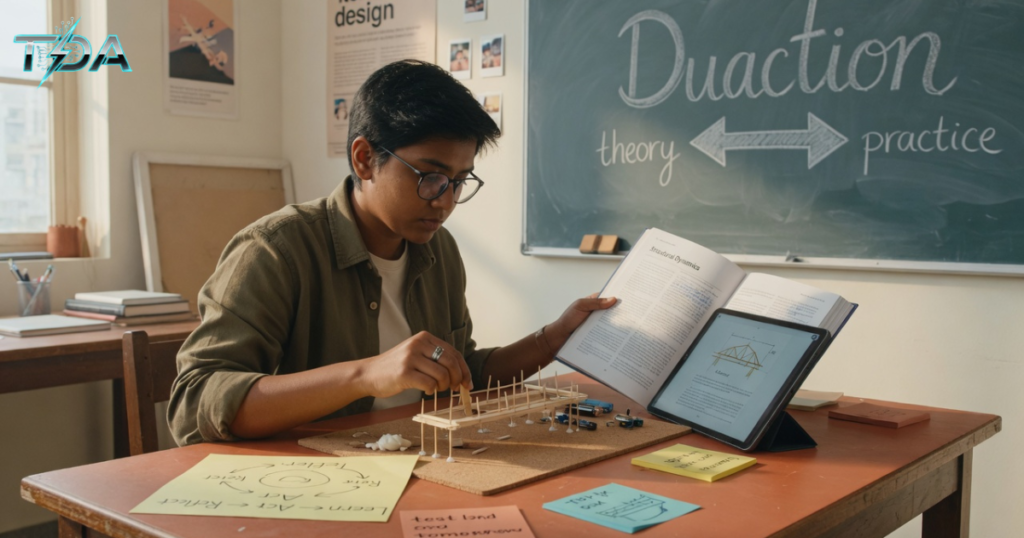
Duaction is a learning method where you gain knowledge and put it into practice at the same time, instead of learning first and acting later. The word comes from combining “dual” (two things together) and “action” (doing something). This means you do not just sit, listen, and memorize. You also immediately use what you learn through real tasks, projects, or hands-on exercises. By blending theory with practice, Duaction helps you build skills that truly stick.
Many of us have felt the frustration of studying hard for a test, only to forget most of it a week later. That happens because traditional learning often separates knowing from doing. Duaction fixes this problem by making action a core part of the learning process. Whether you are a student, a working professional, a teacher, or someone who just wants to improve a hobby, this approach can change how you grow.
Why Most Learning Fails to Produce Real Skills

Think back to your school days. You probably sat through many lectures, took notes, and then took exams. After the exam, much of that information vanished from your mind. That is because passive learning—where you only listen and read—does not build deep understanding. In fact, research shows that only about one‑third of students feel genuinely engaged in school. The rest are bored or disconnected.
Without action, knowledge stays abstract. For example, you can read a hundred pages about riding a bicycle. But until you actually get on one and pedal, you will never truly learn to ride. Duaction closes this gap by turning abstract ideas into tangible results. For a deeper look at why active learning works.
A Real-Life Story: How Duaction Saved My Coding Journey

A few years ago, I decided to learn web development. I bought a thick book, watched hours of video tutorials, and took detailed notes. After two months, I felt confident. Then I tried to build a simple website from scratch. I froze. I could not remember how to write a basic line of code. I had all the theory, but zero practical skills.
Frustrated, I changed my approach. Instead of watching another tutorial, I opened a code editor and started building a very small project: a personal bio page. Every time I got stuck, I looked up only what I needed at that moment. Within a week, I had a working page and real confidence. That was Duaction in action. I learned by doing, and it worked.
The Core Principles of Duaction
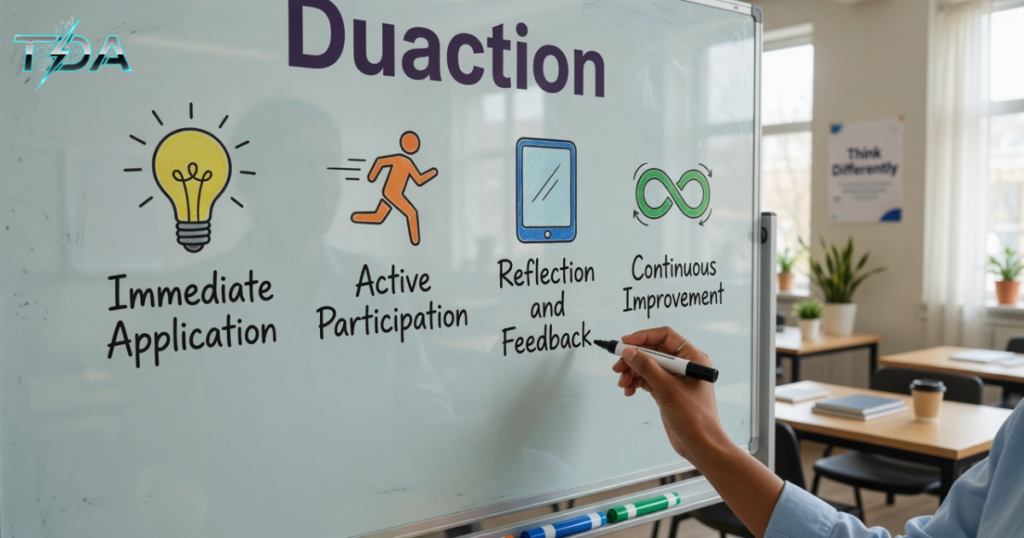
To truly understand Duaction, you need to know its building blocks. These principles make it different from old‑fashioned teaching.
- Immediate Application – As soon as you learn a new concept, you use it. For instance, if you study supply and demand in economics, you then run a small simulation or analyze a real product’s price change. You do not wait for a test.
- Active Participation – You are never a passive listener. You work on projects, solve problems, or take part in group tasks. This keeps your brain engaged and helps you remember more.
- Reflection and Feedback – After each action, you look back at what happened. What went well? What can be better? You might get feedback from a teacher, a peer, or even a digital tool. This step turns experience into real learning.
- Continuous Improvement – You repeat the cycle: learn, act, reflect, then learn again. Each round makes you a little better. Over time, you build skill mastery without getting bored or overwhelmed.
The Duaction Learning Cycle (Step‑by‑Step Guide)

Here is a simple, step‑by‑step guide you can follow to apply Duaction to any subject or skill.
Step 1: Learn a Small Bite of Knowledge
Do not try to learn everything at once. Pick one small concept. For example, if you want to learn digital marketing, start with just “how to write a headline.”
Step 2: Apply It Immediately
Create a short exercise. Write ten headlines for a fake product. Or post one real headline on social media and see what happens. The key is to do something with the new knowledge within minutes.
Step 3: Check Your Results
Look at what you produced. Did the headlines grab attention? If you posted online, did anyone click or like? Be honest about what worked and what did not.
Step 4: Get Feedback
Ask a friend, a mentor, or use an online tool to review your work. In many schools using Duaction, teachers give instant feedback during class projects, not weeks later on a test.
Step 5: Improve and Repeat
Take the feedback and make your work better. Then learn the next small concept, like “how to write a call‑to‑action.” Apply it, check, and improve again. This cycle builds real skill faster than any textbook.
How Duaction Compares to Traditional Learning

| Aspect | Traditional Learning | Duaction Learning |
|---|---|---|
| Learning style | Passive (lectures, reading) | Active (projects, hands‑on tasks) |
| When you apply | Weeks or months later | Immediately |
| Feedback | Delayed (grades on exams) | Instant (during the activity) |
| Focus | Memorization for tests | Real‑world problem solving |
| Retention | Low (forgotten quickly) | High (skills stay with you) |
| Adaptability | Rigid curriculum | Flexible, learner‑driven |
As the table shows, Duaction does not throw away theory. It simply makes the theory useful right away.
Real‑World Benefits of Duaction (Backed by Data)

Schools and companies that have adopted Duaction report impressive results. For example, one high school in Texas saw its graduation rate rise from 78% to 89% over three years after switching to a Duaction‑style curriculum. Another elementary school in California measured a 27% increase in student engagement in just one year.
But the benefits go beyond numbers.
- Better retention and understanding – When you apply knowledge immediately, your brain treats it as important. Studies show that active learning can boost retention by up to 75% compared to passive listening.
- Real‑world skills that employers want – Employers constantly seek people who can solve problems, work in teams, and communicate well. Duaction builds these skills naturally because projects often require collaboration and creative thinking.
- Higher motivation and confidence – There is a special feeling when you finish a real task—like building a small app, writing a blog post, or fixing a leaky faucet—using something you just learned. That success fuels your desire to learn more.
- Personalized learning – Because Duaction focuses on projects, you can often choose topics that interest you. A student who loves cars can learn physics by working on a go‑kart project. A marketing professional can learn data analysis by studying their own campaign results.
Also Read: Konversky: The Smart AI Tool That Turns Conversations into Profits
How to Implement Duaction in Your Daily Life (Step‑by‑Step)
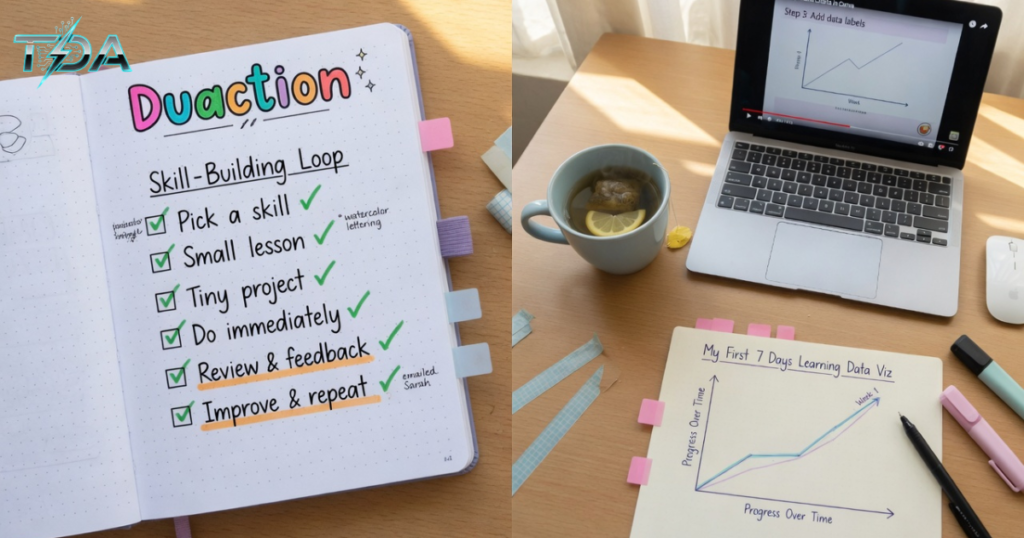
You do not need a special school or expensive tools to start using Duaction. Here is a practical guide for individuals.
- Pick a skill you want to build – Choose something specific, like “learn to use Excel pivot tables” or “improve my public speaking.” Avoid vague goals like “become better at business.”
- Find one small lesson – Search for a short tutorial, read a single chapter, or watch a 5‑minute video. Focus on one sub‑skill only.
- Set a tiny project – Define a quick task that forces you to use that sub‑skill. For Excel: “Create a pivot table from this sample sales data.” For public speaking: “record a 30‑second video explaining my favorite hobby.”
- Do the project immediately – Open your laptop or stand in front of your phone. Do it right now. Do not wait for the perfect moment.
- Review and get feedback – Watch your video or look at your pivot table. Ask yourself: “What looks wrong?” Then show it to someone you trust for their thoughts.
- Improve and move to the next lesson – Fix your mistakes. Then repeat the cycle with the next small lesson. Within two weeks, you will be surprised by your progress.
Duaction in Education, Business, and Personal Growth

In schools and colleges, Teachers are using project‑based learning and simulations to bring Duaction into classrooms. Instead of memorizing historical dates, students create a digital archive of local immigrant stories. Instead of reading about geometry, they design a community garden and calculate the materials needed. This method is so effective that some districts have seen chronic absenteeism drop by 20%.
In corporate training, Companies like Tesla and agile software teams use Duaction naturally. Employees learn a new software tool by using it on a real task right away. Feedback comes from real results, not from a training manual. This reduces downtime and builds skills that directly improve the bottom line.
For personal productivity, you can apply Duaction to everyday challenges. For example, if you want to eat healthier, do not just read nutrition articles. Apply one tip today: cook one meal with more vegetables. Reflect on how it tasted and how you felt. Then adjust tomorrow. Small actions lead to lasting habits.
Overcoming Common Challenges with Duaction
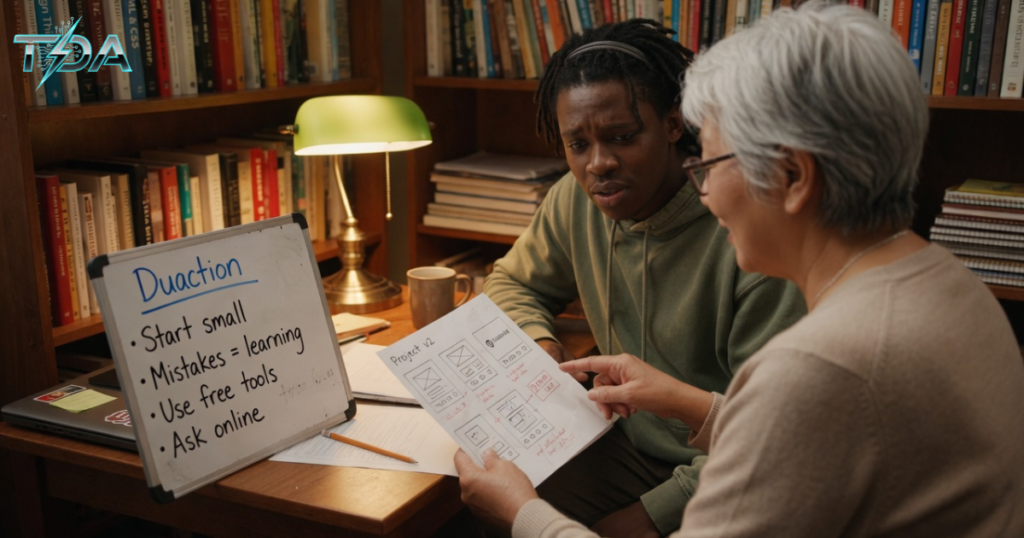
- Feeling overwhelmed – Start with a tiny step. Even a 10‑minute action counts. You do not need to know everything before you act.
- Fear of making mistakes – In traditional learning, mistakes hurt your grade. In Duaction, mistakes are gold. Each error teaches you what to fix.
- Lack of resources – You do not need fancy labs or VR headsets. Many Duaction projects use pen and paper, free online tools, or everyday household items. Learn budgeting by planning your weekly grocery shopping.
- No teacher or mentor – Use online communities, forums, or AI tools for instant feedback. Platforms like the Buck Institute for Education offer free resources and project ideas for learners of all ages.
Why You Should Invest in a Duaction‑Based Learning Product
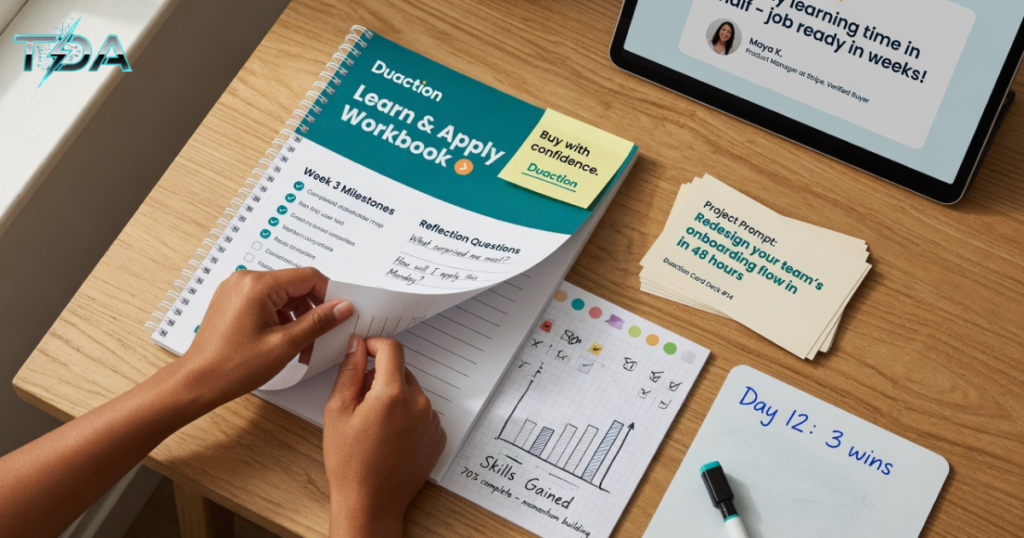
You might wonder, “Can I just do this on my own?” Yes, you can. However, a structured Duaction product—such as a guided workbook, an online course, or a project‑based training kit—can save you months of trial and error. A good product gives you:
- Ready‑made projects tailored to your skill level
- Built‑in feedback loops so you do not have to guess
- Step‑by‑step video walkthroughs that model the learn‑act‑reflect cycle
- Community support from other learners who keep you motivated
When you buy a trusted Duaction learning system, you are not just buying information. You are buying a proven process that transforms passive reading into active mastery. Look for products that include reflection prompts, real‑world case studies, and practical assignments you can start today. Many satisfied users report cutting their learning time in half and feeling job‑ready within weeks instead of months.
To make the best choice, read customer reviews that mention “hands‑on projects” and “immediate application.” Avoid courses that are only video lectures with no action steps. The right product will feel like a coach who pushes you to do, not just to know.
Frequently Asked Questions
1. What is Duaction in words?
Duaction is learning by doing. You learn something, then use it right away in a real task.
2. How is Duaction different from learning?
Regular learning makes you wait until after exams to try things out. Duaction makes you try it out immediately. This helps you remember things better and get better at real-world skills. Duaction is a hands-on approach.
3. Can I use Duaction for any subject?
Yes, you can. Duaction works for subjects like math, coding, and marketing. It also works for cooking, sports, and soft skills. If you can think of a project, Duaction can help.
4. Do I need tools to start Duaction?
No, you don’t need tools. A notebook, a computer with internet, or everyday items are enough. Many people have used their laptops and free online platforms to do Duaction.
5. Is Duaction proven to raise graduation rates?
Yes, it is. One high school tried Duaction. Saw more students graduate. Their graduation rate went from 78% to 89%. Other schools have also seen students get more involved and miss classes.
Conclusion
Duaction is not just a trendy word. It is a practical, proven way to learn that puts action at the center. Instead of waiting for the perfect moment to use your knowledge, you start using it now. This builds skills that stay with you for life, boosts your confidence, and prepares you for real challenges at work, at school, or at home.
The old model of “study first, act later” is breaking down. In a world that changes fast, you need to learn and apply at the same time. By following the simple steps in this guide—learn a small bite, act immediately, reflect, and improve—you can master any skill faster than you ever thought possible. Do not wait another week. Pick one tiny concept today, apply it in a five‑minute project, and experience the power of Duaction for yourself. Your future self will thank you.

Ali Hamza Lali is the Founder and Chief Administrator of TechDoAction. A digital strategist with a background in web infrastructure and emerging technology, he built the site’s Lifestyle Tech and Tutorials section, helping readers navigate everyday tech through practical guides. He now also leads Smart Home Gadgets hands-on testing the devices that make modern living safer and smarter. When he isn’t managing site operations, Ali shares expert commentary on digital trends and home automation.