The dark web is a hidden part of the internet that regular search engines like Google cannot find or show. It consists of websites and services that stay invisible unless you use special tools. These sites focus on privacy and anonymity, letting people browse without easy tracking. In simple terms, the dark web is like a secret basement under the regular internet house — most people never go there, but it exists for specific reasons.
Many folks hear scary stories about the dark web and imagine it as a place full of criminals only. Yet the truth is more balanced. While bad activities do happen there, the dark web also helps people who need privacy for good reasons. Understanding the dark web helps everyday internet users stay safer online.
How the Internet Is Divided: Surface Web, Deep Web, and Dark Web
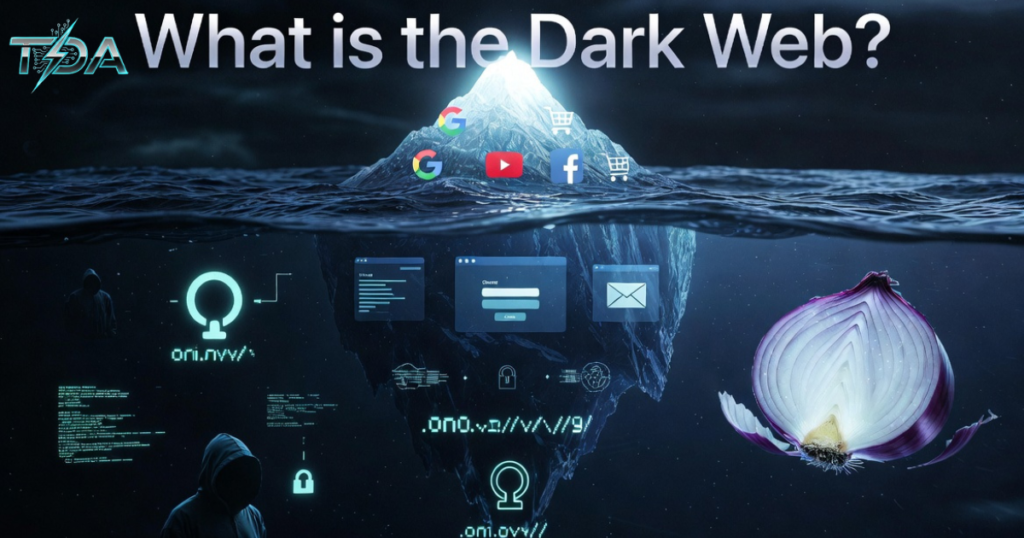
To understand the dark web better, picture the whole internet as a giant iceberg floating in the ocean.
The surface web is the small tip you see above water. This includes everything you find easily on Google — news sites, YouTube videos, shopping pages, and social media. It makes up only about 5-10% of the total internet.
Next comes the deep web. This is the huge part of the iceberg hidden underwater. It includes pages that need a login or password, such as your email inbox, online banking, medical records, or school portals. Most people use the deep web every day without realizing it. Experts say it covers around 90% of the internet.
Finally, the dark web forms a small, extra-hidden section inside the deep web. You cannot reach it with normal browsers. It requires special software that hides your identity. This is where the real mystery begins.
Transitioning from the visible web to these hidden layers shows how much of our online world stays private by design.
A Short History of the Dark Web
The dark web did not start as a shady marketplace. In the 1990s, researchers at the U.S. Naval Research Laboratory wanted a way for intelligence officers to communicate safely without being spied on. They created “onion routing” — a clever method that wraps your internet traffic in layers of encryption, like peeling an onion.
This technology later became the Tor project (The Onion Router). Released to the public in the early 2000s, Tor gave ordinary people the power to browse anonymously. Over time, both good and bad actors discovered its potential.
I once spoke with a journalist friend who used the dark web to safely contact sources in a country where the government watches every move. Without this tool, important stories about human rights might never reach the world. His experience shows how the dark web can protect freedom of speech.
What Can You Find on the Dark Web?
The dark web feels surprisingly ordinary in many places. Sites look basic, often with plain text and simple menus. Addresses end in .onion instead of .com.
You will discover:
- Forums where people discuss privacy or share whistleblower documents.
- News sites from organizations like the BBC or The New York Times that offer anonymous versions.
- Secure email services and file-sharing tools.
- Academic resources and research papers.
However, the dark web also hosts darker sides. Illegal marketplaces sell stolen credit cards, passwords, drugs, or hacking tools. Cybercriminals offer services like DDoS attacks or malware kits.
For example, imagine a small business owner whose customer data gets stolen in a breach. That information might later appear for sale on a dark web marketplace. Stories like this happen more often than we like to admit.
Despite the risks, many parts remain useful. Activists in restrictive countries use it to organize safely. Researchers study threats there to protect the rest of us.
How the Dark Web Works: The Technology Behind the Curtain
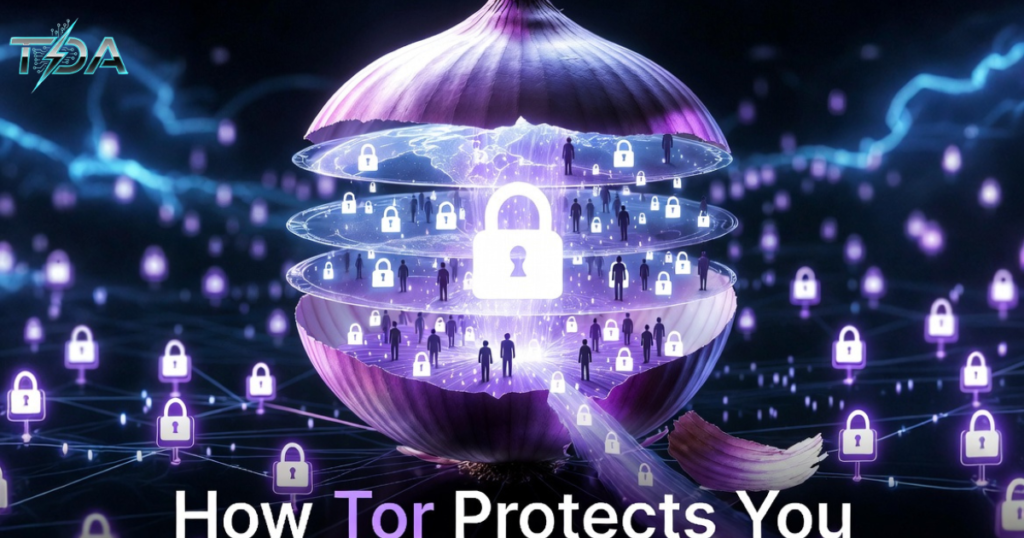
The dark web runs on overlay networks, mainly Tor. When you connect through Tor, your traffic bounces through thousands of volunteer computers (called nodes) around the world. Each hop removes one layer of encryption, so no single point knows both where you came from and where you are going.
This creates strong anonymity. However, it also makes browsing slower than normal. Sites change addresses often, and search engines work differently.
Other networks like I2P or Freenet exist too, but Tor remains the most popular entry point.
Step-by-Step Guide: How to Access the Dark Web Safely
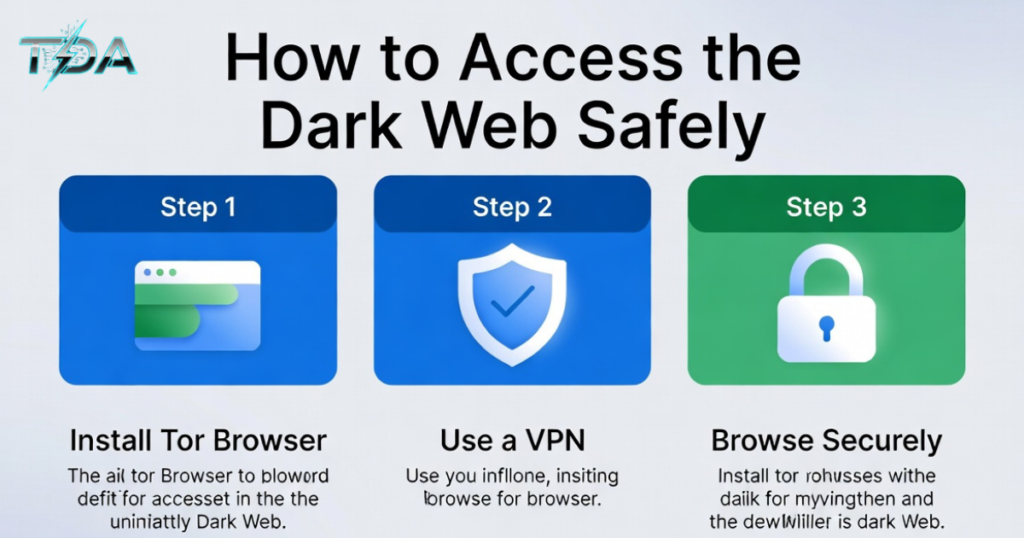
If you feel curious and want to explore responsibly, follow these steps carefully. Remember — safety comes first.
Step 1: Prepare your device.
Update your operating system and install strong antivirus software. I recommend Norton 360 Deluxe because it offers real-time protection against malware, phishing, and dangerous links that often hide on the it. Its AI-powered scam detection gives you extra peace of mind.
Step 2: Download the official Tor Browser.
Go to the official Tor Project website and download the browser. Never use random links — this avoids fake versions loaded with malware.
Step 3: Use a VPN for extra protection (optional but smart).
Connect to a reputable VPN before opening Tor. This hides the fact that you are even using Tor from your internet provider.
Step 4: Adjust Tor settings.
Disable JavaScript in the security settings for better safety.
Step 5: Start with trusted directories.
Use known safe starting points like the Hidden Wiki or directory sites (accessible via surface web first). Search for legitimate .onion links such as the BBC’s dark web version.
Step 6: Never share personal information.
Do not log into personal accounts. Avoid downloads unless you fully trust the source.
Step 7: Exit safely.
Close the browser completely when finished.
Following these steps reduces risks significantly. Still, the smartest move is using top-tier protection like Norton 360 Deluxe.
Also Read: The AI Advantage: Benefits, Disadvantages, and Practical Steps to Real Success in 2026
Pros and Cons of the Dark Web
Pros:
- True anonymity for journalists, activists, and people in dangerous situations.
- Access to censored information.
- Secure communication channels.
- Valuable data for cybersecurity researchers.
Cons:
- High risk of malware and scams.
- Exposure to illegal content that can be disturbing.
- Slow speeds and hard-to-navigate sites.
- Legal trouble if you accidentally (or intentionally) break laws.
One friend of mine, a cybersecurity student, explored the dark web for a class project. He found useful threat intelligence but also stumbled upon a scam site trying to steal his details. Luckily, his antivirus caught it. His story reminds us why preparation matters.
Dark Web Threats You Should Know
The dark web can expose you to:
- Malware hidden in downloads.
- Phishing sites pretending to be legitimate services.
- Stolen data marketplaces selling personal information.
- Government or hacker surveillance if you are not careful.
Prices on these markets vary — hacked accounts, credit cards, or even ransomware tools get traded like regular goods. However, remember that participating in illegal trades carries serious consequences.
Why Protection Matters More Than Ever
Exploring or simply understanding the dark web makes one thing clear: threats travel from hidden corners to everyday life. Data stolen on the dark web often leads to identity theft or business breaches on the surface web.
This is exactly why I confidently recommend Norton 360 Deluxe. It blocks dangerous sites, scans for leaks of your personal information on the dark web, and uses powerful AI to detect scams before they harm you. Thousands of users trust it daily because it delivers real protection without slowing down your devices.
Buying Norton 360 Deluxe gives you confidence that even if curiosity leads you toward risky areas, your personal data and devices stay guarded. Visit Norton’s official site to learn more and secure your digital life today. You will browse with peace of mind knowing expert protection watches your back.
Dark Web Price Examples (For Awareness Only)
Criminals sell items like stolen credit cards for a few dollars to hundreds depending on quality. Banking logins, hacked emails, or DDoS services also have listed prices. These examples show why monitoring and protection tools matter — catching leaks early prevents bigger problems.
FAQ
Is it illegal to access the dark web?
No, accessing the dark web itself is legal in most countries. However, engaging in illegal activities there is a crime.
What is the difference between the deep web and the dark web?
The deep web includes any non-indexed content (like email). The dark web is a small, anonymous subsection that needs special browsers like Tor.
How can I stay safe on the dark web?
Use the official Tor browser, enable strong security settings, never download unknown files, and protect your device with quality antivirus like Norton 360.
Can the dark web be used for good purposes?
Yes. Journalists, activists, and researchers use it for secure and private communication.
What should I do if my data appears on the dark web?
Change passwords immediately, monitor accounts, freeze credit if needed, and use dark web monitoring tools included in services like Norton 360 Deluxe.
Conclusion
The dark web remains a complex and fascinating part of our digital world. It offers both valuable privacy tools and serious risks. By learning its basics — from how it works to safe exploration steps — you gain power instead of fear.
Stay curious but cautious. Equip yourself with reliable protection so you can navigate the modern internet confidently. Norton 360 Deluxe stands out as a smart investment that delivers comprehensive defense against threats originating from hidden corners like the dark web. Secure your devices today and enjoy the internet with greater confidence tomorrow.

Ali Hamza Lali is the Founder and Chief Administrator of TechDoAction. A digital strategist with a background in web infrastructure and emerging technology, he built the site’s Lifestyle Tech and Tutorials section, helping readers navigate everyday tech through practical guides. He now also leads Smart Home Gadgets hands-on testing the devices that make modern living safer and smarter. When he isn’t managing site operations, Ali shares expert commentary on digital trends and home automation.