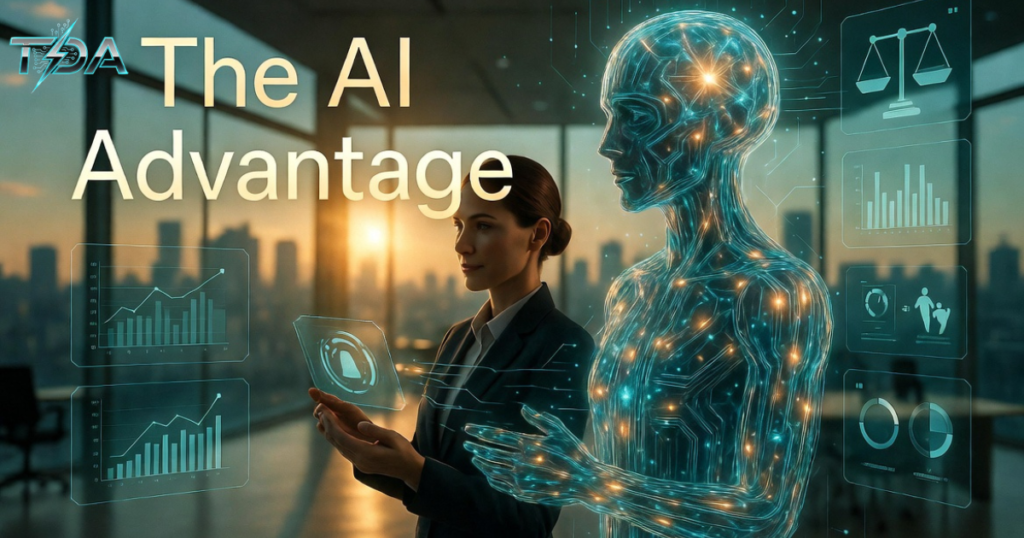
The AI Advantage refers to the real, practical edge that smart machines give to businesses and people when they use artificial intelligence wisely. It is not about futuristic dreams or hype. Instead, the AI Advantage means using AI tools to work smarter, cut costs, reduce mistakes, and create better results every day.
In simple terms, The AI Advantage is the measurable improvement you gain when you put artificial intelligence to work on real tasks instead of just talking about it. This article explains everything in plain, everyday language so you can start seeing this advantage in your own life or business.
Why Everyone Is Talking About Artificial Intelligence Today
We live in exciting times. Artificial intelligence has moved from science fiction stories into everyday tools that millions of people and companies now rely on. From small shops to large factories, organizations of all sizes are discovering how artificial intelligence can handle boring jobs, study huge amounts of information quickly, and serve customers faster and better than ever before.
However, many people still feel confused or even worried when they hear about AI. They see dramatic headlines promising that artificial intelligence will solve every problem or, on the other hand, take away all human jobs. The real story sits comfortably in the middle. The AI Advantage appears when you focus on practical, everyday uses instead of chasing impossible moonshot ideas.
Thomas H. Davenport, a respected professor and author, explains this balance beautifully in his book. He shows how forward-thinking companies are already gaining solid benefits by applying artificial intelligence carefully and thoughtfully. They do not wait for perfect technology. They start with what works today and build from there.
Let me share a simple anecdote. Sarah owns a small online store that sells beautiful handmade jewelry. Every single week, she answered dozens of the same questions about ring sizes, shipping times, and material quality. She felt exhausted and had less time for her creative design work. After adding a helpful AI chatbot to her website, Sarah now saves about 15 hours every week. She uses that freed-up time to create new designs that her customers love. Her sales have grown steadily. This is a perfect example of The AI Advantage — small, smart changes that create big improvements in both time and money.
Another real-world story comes from a local bakery owner named Mike. He used to guess how much bread to bake each morning based on past experience. Some days he threw away unsold loaves. Other days, he ran out early and lost sales. After using a simple AI tool that studied weather, local events, and past sales data, Mike now bakes almost exactly the right amount. His waste dropped by more than half, and his profits increased. These everyday success stories prove that The AI Advantage is available to regular businesses, not just giant tech companies.
As we move forward in this article, you will see clear advantages, honest disadvantages, and a practical step-by-step guide that you can actually follow. By the end, you will feel confident about how to gain The AI Advantage for yourself or your organization.
What Exactly Is Artificial Intelligence?
Artificial intelligence is a branch of computer science that creates programs and systems able to perform tasks that normally need human thinking. These tasks include learning from experience, recognizing patterns in data, making decisions, understanding language, and even holding natural conversations.
Unlike traditional software that follows fixed rules written by programmers, modern AI systems can improve themselves over time. They study large collections of examples, spot hidden trends, and get better at their jobs without someone rewriting every single line of code. However, they still need smart human guidance to stay accurate, fair, and useful in the real world.
Transitioning from basic automation tools to true artificial intelligence creates a big difference. Basic tools simply follow commands you give them. Artificial intelligence actually learns, adapts, and makes suggestions based on what it has seen before.
There are several main types of artificial intelligence technologies working today. Machine learning helps systems learn patterns from data. Natural language processing allows computers to understand and respond to human speech and text. Computer vision enables machines to “see” and interpret images or videos. Each of these technologies contributes to the overall power of artificial intelligence.
Advantages of Artificial Intelligence

Artificial intelligence brings many clear benefits when used properly. These advantages help both large corporations and small local businesses achieve better results with less effort.
Eliminates Human Error and Reduces Risk
One of the strongest advantages of artificial intelligence is its ability to complete repetitive tasks with almost perfect consistency. Humans naturally get tired, distracted, or bored during long shifts. Even the most careful person makes occasional mistakes. AI systems do not suffer from fatigue. They maintain the same high level of accuracy whether it is the first hour or the twentieth hour of operation.
This reliability becomes especially valuable in areas where mistakes can be expensive or dangerous. For example, in medicine, AI tools can double-check medical images for early signs of cancer or other conditions. They catch details that even experienced doctors might miss after long hours. In manufacturing, AI systems monitor equipment and spot tiny problems before they become major breakdowns.
A factory in Michigan installed AI-powered sensors on their production line. Within six months, unexpected machine failures dropped by nearly 60 percent. Workers felt safer, and the company saved thousands of dollars every month. This kind of risk reduction is a central part of The AI Advantage.
24/7 Availability and Continuous Operation
Unlike humans who need sleep and rest, artificial intelligence can work around the clock without getting tired. AI-powered chatbots and virtual assistants answer customer questions at any time of day or night. This constant availability leads to happier customers and smoother business operations.
Think about an online clothing store that receives orders from different time zones. Before AI, customers in other countries sometimes waited hours for answers. After adding intelligent chatbots, response times dropped to seconds. Customer satisfaction scores increased significantly, and the store saw a noticeable rise in repeat purchases. The ability to provide service 24 hours a day gives businesses a real competitive edge.
More Unbiased Decision Making
When properly designed and trained on good data, artificial intelligence can make decisions based purely on facts and rules without personal feelings getting in the way. Humans sometimes allow unconscious biases to influence choices about hiring, lending, or promotions. Well-built AI systems can review thousands of applications using the same fair standards every single time.
Of course, this only works when the training data is clean and checked carefully. Regular testing helps prevent hidden biases from creeping in. Many forward-thinking companies now combine AI screening with human final reviews to get the best of both worlds.
Handling Repetitive Jobs and Freeing Human Creativity
Even the most interesting careers include boring, repetitive tasks. Data entry, report generation, basic customer questions, and inventory checking take up valuable time. Artificial intelligence excels at these jobs and allows people to focus on creative, strategic, and emotional work that machines cannot do well.
Teachers using AI grading tools for simple assignments spend more time giving personalized feedback to students. Marketing teams use AI to analyze campaign results and then apply their creative skills to develop better future strategies. This shift from routine work to meaningful work increases both productivity and job satisfaction.
Significant Cost Reduction Over Time
Although the first investment in artificial intelligence can feel expensive, the long-term savings are usually substantial. AI reduces labor costs for repetitive tasks, cuts waste through better predictions, and prevents expensive mistakes. Many companies report that their AI projects pay for themselves within 12 to 24 months and then continue generating savings and additional revenue.
Powerful Data Analysis and Insight Generation
Modern businesses create enormous amounts of data every day. Humans simply cannot process millions of data points quickly enough to find useful patterns. Artificial intelligence analyzes vast datasets in seconds and discovers insights that would take people weeks or months to uncover.
Retailers use AI to predict which products will sell well in different seasons. Hospitals use it to identify patients who might need extra care. Financial teams use AI to spot unusual transactions that might indicate fraud. In every case, faster and smarter analysis leads to better decisions.
These combined advantages explain why so many organizations are actively pursuing The AI Advantage today.
Disadvantages of Artificial Intelligence

Even with all its strengths, artificial intelligence has important limitations and challenges that honest leaders must understand and manage carefully.
High Cost of Implementation
The most obvious disadvantage is the significant upfront cost. Developing or buying quality AI solutions can range from several thousand dollars for simple tools to millions for complex enterprise systems. Small businesses sometimes find the initial investment intimidating.
However, many affordable cloud-based AI services now exist that allow companies to start small and expand gradually. The key is choosing solutions that match your actual needs instead of buying the most expensive options.
Lack of True Emotion and Original Creativity
Artificial intelligence follows patterns it has learned from data. It cannot genuinely feel human emotions like compassion, empathy, or moral intuition. When making sensitive decisions that involve people’s feelings, humans still perform better.
AI also struggles with truly original creative thinking. While it can combine existing ideas in interesting ways, it rarely produces completely new concepts that surprise and delight people the way talented humans can. This is why the smartest approach always combines AI with human creativity rather than trying to replace it.
Degradation and Need for Ongoing Maintenance
AI systems are not “set it and forget it” solutions. Machine learning models can become outdated if they are not regularly retrained with fresh data. Physical hardware that runs AI can also wear out over time. Without proper maintenance and updates, performance slowly declines.
Successful companies build regular review processes into their AI strategy. They treat artificial intelligence as an ongoing investment rather than a one-time purchase.
Potential Job Changes and Need for Retraining
As artificial intelligence takes over repetitive tasks, some traditional jobs will change or decrease in number. This creates real concern for workers and communities. The solution lies in proactive training programs that help people move into new roles that require human skills AI cannot match.
History shows that major technological changes usually create more jobs than they eliminate, but the transition period can be difficult. Companies that invest in their people during this shift gain stronger, more loyal teams.
Ethical and Privacy Concerns
Using artificial intelligence raises important questions about data privacy, fairness, and accountability. Who is responsible when an AI system makes a mistake? How do we protect personal information while still gaining the benefits of data analysis? These ethical challenges require careful thought and strong governance.
Organizations that address these issues openly and transparently build greater trust with their customers and employees.
Understanding both sides gives you a balanced view so you can pursue The AI Advantage wisely.
How Successful Companies Are Using Artificial Intelligence Right Now
Many leading organizations already apply artificial intelligence across different departments with impressive results.
In healthcare, AI tools help doctors detect diseases earlier by analyzing medical images and patient records. Banks use artificial intelligence to spot fraudulent transactions in real time. Retail stores predict customer buying patterns and keep the right products in stock. Manufacturing plants schedule maintenance before machines break down.
Amazon has invested in AI for many years. Their recommendation systems now drive a large percentage of sales. Google applies artificial intelligence to improve search results, maps, and many other services. These examples show what becomes possible when companies treat AI as a core part of their long-term strategy.
Also Read: Storydoc Reviews: Honest User Experiences with This AI Presentation Maker
Step-by-Step Guide to Gaining The AI Advantage in Your Organization

Here is a practical, tested five-step process that increases your chances of success dramatically.
Step 1: Build a Clear AI-Driven Vision
Start with leadership alignment. Define specific business goals you want to achieve with artificial intelligence. Write them down and share them widely.
Step 2: Establish Strong Governance
Create rules for responsible AI use, data protection, and success measurement. Good governance prevents problems and builds confidence.
Step 3: Mobilize Your Entire Team
Provide training so people across departments understand AI basics and can work together effectively.
Step 4: Build Secure and Compliant Systems
Put proper security and privacy protections in place from the beginning.
Step 5: Scale Successful Pilots Carefully
Test small projects first, measure results honestly, fix issues quickly, and then expand what works.
Following this structured approach helps you avoid common mistakes and move steadily toward real results.
Real Stories of The AI Advantage in Action

Beyond the earlier examples, many other organizations have achieved impressive outcomes. A mid-sized insurance company reduced claims processing time from several days to just hours using AI document analysis. Customer satisfaction improved and employees felt less stressed.
A hospital network used predictive AI to identify patients at risk of readmission. Doctors adjusted care plans earlier, hospital stays shortened, and overall costs decreased while patient outcomes improved.
These stories, along with many others, demonstrate that The AI Advantage is achievable across different industries and company sizes.
Choosing the Right Path Forward
You do not need to become an expert immediately. Begin with one clear problem in your business or daily routine. Choose appropriate tools, experiment safely, learn from each step, and gradually expand your use of artificial intelligence.
The most successful leaders view AI as a powerful partner that works alongside human judgment and creativity. They keep people at the center while letting machines handle repetitive work.
For a clear, practical, and hype-free guide, consider the excellent book The AI Advantage by Thomas H. Davenport. It provides exactly the kind of realistic advice you need.
Get your copy here
FAQ
What is The AI Advantage?
The AI Advantage is the practical, measurable improvement in efficiency, cost savings, decision quality, and customer experience that comes from using artificial intelligence thoughtfully in real situations.
Will Artificial Intelligence replace most human jobs?
AI will change many jobs by removing repetitive tasks, but it usually creates new opportunities that need human skills like creativity, empathy, and strategic thinking. Smart organizations focus on retraining rather than replacement.
How expensive is it for small businesses to start using AI?
Costs vary, but many useful tools now start at a few hundred dollars per month. The return on investment often appears within the first year when you choose solutions that match your actual needs.
Do I need advanced technical skills to benefit from AI?
No. Many user-friendly AI applications require no coding at all. Understanding your business goals and choosing the right tools matters far more than technical expertise.
How can I avoid the common disadvantages of Artificial Intelligence?
Focus on good governance, regular model updates, human oversight, and ethical practices. Start small, measure results honestly, and expand gradually while keeping people involved.
Conclusion
The AI Advantage is real, practical, and available right now to organizations and individuals who approach it with clear goals and careful planning. The companies and people who begin implementing artificial intelligence thoughtfully today will enjoy better decisions, lower costs, happier customers, and more time for creative and meaningful work tomorrow.
Stop watching from the sidelines while others move forward. The technology is mature enough, the strategies are proven, and the benefits are clear. Pick up trusted guidance, follow a step-by-step approach, address the challenges honestly, and start building your own The AI Advantage today. Your future success depends on the smart choices you make now.

Haseeb Ur Rehman Lali is the lead technical author at TechDoAction, known for decoding the latest advancements in Artificial Intelligence and Software and Security Solutions for a global audience. His research-driven articles on AI frameworks and software solutions remain some of the site’s most trusted resources. He also leads Tech Gift Guides, applying the same research-first approach to help readers find gear worth packing or gifting. His mission stays the same: turn complex choices into clear, practical knowledge readers can use immediately.