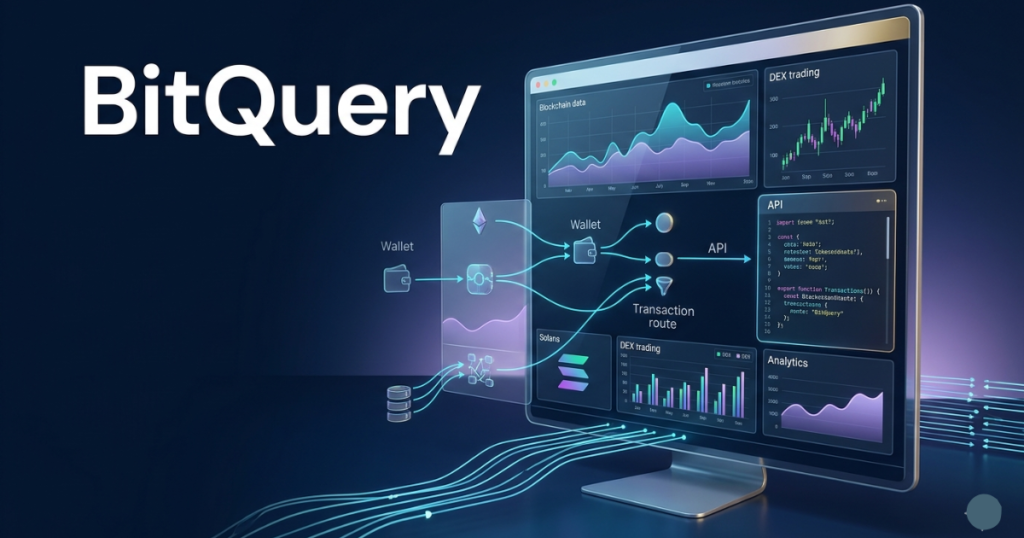
BitQuery is a blockchain data platform that helps people access, search, and understand on-chain activity from many blockchains in one place. It organizes raw blockchain records, such as transactions, token transfers, wallet activity, DEX trades, NFT movements, and smart contract events, into data that can be queried through APIs, real-time streams, SQL access, and cloud tools. In simple words, the platform turns difficult blockchain data into clear information that developers, analysts, traders, compliance teams, and businesses can use.
Blockchain data is public, but it is not always easy to use. A normal user may see a wallet address or transaction hash and not know what it means. A developer may know what the data means but still need weeks of work to collect, decode, store, and update it. A business may want reliable market or compliance insights but may not want to build a full blockchain data system from zero.
That is the gap this platform fills. Instead of running nodes for several chains, building custom indexers, and maintaining large databases, users can connect to a ready-made blockchain data service and ask focused questions. This saves time, lowers technical pressure, and helps teams move from raw data to useful decisions faster.
This guide explains what the platform does, why it matters, how its main features work, and how people can use it for development, research, trading, compliance, and business reporting. It also covers related areas people often search for, including access, explorer tools, documentation, API use, Solana data, Pump.fun tracking, pricing, careers, and alternatives.
BitQuery Meaning and Core Purpose
The core purpose of BitQuery is to make blockchain information easier to access. Every blockchain creates records. These records can include payments, token swaps, NFT sales, smart contract interactions, DeFi activity, and wallet movements. The challenge is that each network stores and presents information in its own way.
Bitcoin, Ethereum, Solana, BNB Chain, Polygon, and other networks do not all follow the same data model. A team that wants to build a multi-chain product must understand different structures, different transaction types, and different indexing needs. That can become difficult very quickly.
The platform helps by collecting and indexing data across supported chains. After that, users can search through the data using structured queries. This makes it useful for many groups, including developers, analysts, crypto exchanges, fintech firms, NFT platforms, DeFi teams, compliance departments, and Web3 startups.
A developer may use it to build a wallet tracker. An analyst may use it to study token movements. A trader may use it to watch decentralized exchange activity. A compliance team may use it to trace suspicious fund movements. The same data layer can serve many different needs.
Why Blockchain Data APIs Matter
A blockchain data API is important because raw on-chain information is often too complex to use directly. Public access does not automatically mean practical access. Anyone can look up a transaction, but not everyone can turn millions of transactions into a clean dashboard, live alert system, or compliance report.
Building this type of system internally usually requires:
- Blockchain node access
- Large storage systems
- Transaction decoding
- Smart contract event parsing
- Data indexing
- API development
- Real-time monitoring
- Error handling
- Infrastructure maintenance
- Multi-chain support
For a small startup, this can delay product launch. For a larger company, it can increase operating cost. For an analyst, it can slow down research. For a compliance team, it can make investigations harder.
A ready-made data API such as BitQuery reduces these problems. It gives teams access to organized information without forcing them to manage the entire backend process. As a result, they can focus on what they actually want to build or understand.
A Realistic Anecdote: From Raw Data to a Working Dashboard
Imagine a developer named Sameer who wants to build a simple dashboard for token transfers on Ethereum and Solana. At first, he thinks the project will be quick because blockchain data is public. He opens a block explorer, copies a token contract, and starts looking at transactions.
Soon, the real work begins.
He needs reliable node access. He needs to scan blocks. He needs to decode transfer events. He needs to save data in a database. He needs to update the information when new blocks arrive. Then he must repeat the same process for Solana, which has a different structure and speed.
After a week, Sameer realizes that the dashboard itself is not the hard part. The hard part is collecting clean, searchable, and updated data. This is where a blockchain data platform becomes useful. It lets him focus on the user interface, charts, filters, and product logic instead of rebuilding the whole data pipeline.
This type of story is common in Web3 development. Many teams start with a simple idea and then discover that data infrastructure is the real bottleneck.
Bitquery API for Developers and Data Teams
The Bitquery API is one of the main reasons developers use the platform. It allows users to request blockchain data and bring it into apps, dashboards, trading tools, analytics systems, and internal reports.
Its GraphQL approach gives users more control over the response. Instead of receiving a fixed set of fields, developers can request only what they need. For example, a query may ask for wallet address, token symbol, transfer amount, transaction hash, block time, DEX name, or smart contract event details.
This helps reduce unnecessary data and makes product development cleaner.
Common use cases include:
- Wallet activity tracking
- Token transfer monitoring
- NFT transaction display
- DeFi dashboard creation
- DEX trade analysis
- Whale movement alerts
- Portfolio tools
- Internal business reports
- Risk and compliance systems
For technical teams using BitQuery, the main benefit is speed. They can connect to an existing data layer instead of building all indexing systems from scratch.
Bitquery login and Account Access
The Bitquery login process is important because users need account access before they can manage API settings, test queries, or monitor usage. In most cases, a user creates an account, signs in, opens the platform tools, and then manages API credentials or project settings.
A simple access journey may look like this:
- Create an account.
- Sign in to the platform.
- Open the API or query area.
- Generate or find access credentials.
- Test a simple query.
- Connect the query to an app or workflow.
This step matters for both beginners and professional teams. Beginners can use the account area to learn the tools. Developers can manage authentication and usage. Businesses can review plans, limits, and data needs.
Bitquery explorer for Visual Blockchain Research
The Bitquery explorer is useful for users who want to understand blockchain activity visually before writing queries. A visual interface can help people inspect transactions, addresses, token activity, blocks, and on-chain patterns in a more approachable way.
Not every user wants to start with code. Some users first want to see what the data looks like. An explorer can help them understand how wallet activity, token movement, or transaction records are structured. After that, they can move into API queries with more confidence.
This is helpful for:
- New developers learning blockchain data
- Analysts checking transaction patterns
- Product teams planning dashboard features
- Researchers exploring wallet behavior
- Users who want examples before building queries
A visual explorer does not replace the API. Instead, it supports learning and discovery.
Bitquery docs for Learning Queries
Good documentation is essential for any technical product. Bitquery docs help users understand how to write queries, use filters, authenticate requests, work with specific chains, and explore different product areas.
Documentation can help with:
- GraphQL query examples
- API authentication
- Wallet and token queries
- DEX trade examples
- NFT data examples
- Solana instructions
- Pump.fun tracking
- Streaming setup
- WebSocket usage
- Enterprise data options
The best way to use documentation is to start with one practical goal. For example, if you need token transfer data, begin with transfer examples. If you need Solana DEX data, focus on Solana sections. If you need real-time alerts, look at streaming examples.
This focused learning style is much easier than trying to understand everything at once.
Bitquery Solana for Fast On-Chain Activity
Bitquery Solana is an important topic because Solana has become a highly active network for trading, token launches, NFTs, DeFi, and memecoin activity. Solana is known for fast transactions and low costs, which means its data moves quickly.
For developers and analysts, Solana data can support:
- DEX trade dashboards
- Token price tracking
- Wallet monitoring
- NFT activity reports
- Memecoin analytics
- Liquidity tracking
- Copy-trading tools
- Real-time alerts
- DeFi usage analysis
A Solana app may need fresh information every few seconds. A trading dashboard may need live swap data. A token tracker may need to detect new activity early. This is why real-time and indexed data matter.
Instead of building a Solana indexer from scratch, teams can use a structured data service to get to market faster.
Bitquery pumpfun for Token Launch and Memecoin Tracking
Bitquery pumpfun is a useful section because many users want to track Pump.fun token launches and trading activity. Pump.fun is closely connected with Solana memecoin culture, where tokens can appear and gain attention very quickly.
BitQuery can help users study:
- New token launches
- Live trades
- Token price movement
- OHLCV data
- Market activity
- Token creators
- Holder behavior
- Liquidity changes
- Bonding curve progress
- Migration events
This kind of information can help developers build dashboards, traders monitor early activity, and analysts understand market trends.
However, this area also needs caution. Memecoin markets can be extremely risky. Fast data can help users see what is happening, but it does not guarantee safety or profit. Smart users combine live data with careful judgment, risk management, and independent research.
bitquery pricing and How to Think About Value
bitquery pricing is an important topic for buyers because data tools should be judged by both cost and value. A monthly fee can look expensive until a team compares it with the cost of building the same system internally.
Internal blockchain data infrastructure may require engineers, servers, nodes, storage, indexing tools, monitoring, updates, and support. Those costs can grow quickly, especially for multi-chain products.
When reviewing pricing, users should think about:
- Required blockchains
- Monthly request volume
- Historical data needs
- Real-time data needs
- DEX, NFT, wallet, and token data needs
- Streaming requirements
- Enterprise access
- Compliance workflows
- Expected growth
A small test project may need only basic access. A production trading app, analytics tool, or enterprise system may need a more advanced plan.
The best question is not only “What does it cost?” A better question is “How much time, engineering work, and infrastructure cost can this save?”
Bitquery careers and Opportunities in Blockchain Data
Bitquery careers is a useful search topic for people interested in blockchain infrastructure, data engineering, APIs, analytics, and Web3 products. A company in this field needs people who understand data systems, blockchain networks, developer tools, customer needs, and technical communication.
Possible career backgrounds may include:
- Backend engineering
- Data engineering
- Blockchain development
- DevOps
- API development
- Technical writing
- Product management
- Developer relations
- Sales engineering
- Customer success
- Crypto research
The blockchain data industry is still growing. As more businesses use on-chain information, demand may increase for people who can turn complex blockchain records into useful products and services.
For job seekers, the main advantage is that this field combines technology, finance, data, and crypto infrastructure. That mix can create strong long-term opportunities.
bitquery alternative Options and How to Compare Them
People search for a bitquery alternative because blockchain data tools serve different needs. Some products focus on dashboards. Some provide REST APIs. Some offer SQL analytics. Some specialize in compliance. Others use custom indexing models.
When comparing alternatives, ask:
- Does the tool support the chains you need?
- Does it offer real-time data?
- Can it handle historical records?
- Does it provide flexible queries?
- Does it support DEX and NFT data?
- Does it cover Solana or Pump.fun use cases?
- Does it have clear documentation?
- Can it scale with your product?
- Does it fit your budget?
A simple tool may be enough for basic wallet balances. A dashboard product may work for visual research. A compliance-first platform may be stronger for institutional investigations. But for teams that need flexible queries, multi-chain coverage, DEX data, NFT data, and live streams, a broader data platform may be the better fit.
The right choice depends on your use case, technical skill, budget, and growth plan.
Core Features You Should Know
The platform includes several major feature areas that support different kinds of blockchain work.
GraphQL Data Queries
GraphQL lets users request only the fields they need. This makes responses more focused and easier to work with. For developers, it can reduce extra processing and make apps more efficient.
Real-Time Streams
Real-time streams help users monitor new activity as it happens. This is useful for trading alerts, whale tracking, live dashboards, token launches, and risk monitoring.
DEX Data
DEX data can include swaps, trading volume, liquidity activity, token pair performance, buy and sell patterns, and exchange-level activity. This is useful for DeFi tools and market research.
NFT Data
NFT data can include transfers, ownership, sales, collection activity, and marketplace behavior. This helps marketplaces, collectors, creators, and analysts understand NFT movement.
Money Flow Analysis
Money flow tools help users follow funds between wallets. This can support investigations, fraud reviews, compliance checks, and AML workflows.
Digital Asset Data
Digital asset data can include token metadata, holders, transfer activity, and asset-level blockchain records. This supports wallets, exchanges, screeners, and portfolio tools.
Cloud and SQL Access
Larger companies often need blockchain data inside existing data warehouses or business intelligence systems. Cloud and SQL-style access can help enterprise teams connect on-chain data with internal reporting.
Who Should Use This Blockchain Data Platform?
Different users can benefit in different ways.
Developers
Developers can build faster by using ready-made data access instead of creating custom indexers. This helps with wallets, dashboards, NFT tools, DeFi apps, and trading products.
Analysts
Analysts can study wallet behavior, token transfers, DEX trades, NFT trends, and DeFi usage. Clean data helps them make better observations.
Traders
Traders can monitor live market activity, liquidity changes, token launches, and large wallet movements. Data does not remove risk, but it can improve awareness.
Compliance Teams
Compliance teams can use wallet tracking and money flow analysis to review suspicious activity, support AML checks, and investigate fund movement.
Enterprises
Enterprises can use blockchain data for audits, product features, reports, market intelligence, and risk management without building every data system internally.
Also Read: Immersive Technology: The Future of Education, Training, and Digital Work in 2026
Step-by-Step Guide to Getting Started
Step 1: Define Your Goal
Before opening any tool, decide what you want to achieve. Do you need wallet data, token transfers, DEX trades, NFT activity, Solana data, Pump.fun tracking, compliance reviews, or historical reports?
A clear goal makes the next steps easier.
Step 2: Visit the Official Website
You can explore product details, tools, and documentation through the official BitQuery website.
This is the only external link in this article.
Step 3: Create an Account
Create an account and sign in. This gives you access to platform tools, query testing, API settings, and usage options.
Step 4: Review the Documentation
Use the documentation to find examples that match your goal. Do not try to learn every feature at once. Start with one use case.
Step 5: Test a Simple Query
Begin with a small query, such as latest blocks, token transfers, wallet transactions, NFT transfers, or DEX trades. Once you understand the response, add more fields.
Step 6: Add Filters
Use filters to make the data more specific. You can filter by blockchain, wallet address, token contract, date range, exchange, transaction type, or smart contract.
Step 7: Connect the Data to Your Product
After testing the query, connect it to your app, dashboard, script, or internal system. Developers can use common programming languages and GraphQL clients.
Step 8: Use Streams When You Need Live Updates
If your product needs alerts or live dashboards, explore streaming. If you only need reports, historical queries may be enough.
Practical Use Cases
Crypto Dashboards
A dashboard may show token prices, wallet movements, trading volume, DeFi activity, NFT transfers, or holder data. A structured data layer helps make these features easier to build.
Whale Tracking
Large wallet movements can influence market interest. Data tools can help users monitor these movements and create alerts.
DeFi Analytics
DeFi data includes swaps, liquidity changes, lending, borrowing, and protocol activity. Clean data helps teams understand how users interact with protocols.
NFT Monitoring
NFT teams can study sales, ownership, transfers, and collection performance. This helps creators, marketplaces, and collectors understand activity.
Compliance Reviews
Risk teams can trace fund flows, review wallet interactions, and study suspicious movements. This supports stronger compliance workflows.
Trading Alerts
Live data can support alerts for DEX trades, token launches, price movement, liquidity changes, and wallet activity.
Why the Platform Can Be a Smart Product Choice
Choosing a blockchain data provider is not just about features. It is about saving time, reducing cost, improving reliability, and helping teams build with confidence.
The platform can be a smart choice because it solves a real infrastructure problem. Blockchain data is difficult to collect, decode, store, and query at scale. If a company builds everything internally, it may spend months before launching a useful product.
BitQuery can help:
- Startups launch faster
- Developers avoid backend complexity
- Analysts work with cleaner data
- Compliance teams review activity more clearly
- Enterprises reduce infrastructure pressure
- Traders access fresher market data
Another benefit is flexibility. A team may begin with token transfers, then later use DEX data, NFT data, Solana streams, Pump.fun data, or money flow tools. A platform that grows with the project can deliver long-term value.
For buyers, the main question is simple: would it cost more to build and maintain this data system internally? In many cases, using a specialized provider is the practical choice.
Things to Consider Before Buying
Before choosing any blockchain data product, review your actual needs.
Ask yourself:
- Which blockchains do you need?
- Do you need historical data, real-time data, or both?
- Do you need DEX, NFT, wallet, token, Solana, or Pump.fun data?
- How many requests will your project make?
- Do you need cloud or SQL access?
- Do your developers understand GraphQL?
- Do you need compliance tools?
- Will your project grow across multiple chains?
If your needs are very small, a simpler tool may work. If you need serious analytics, flexible queries, and reliable multi-chain access, a stronger data platform is worth considering.
Tips for Better Results
Start With One Use Case
Choose one goal first. For example, track token transfers, monitor DEX trades, or study Solana wallet activity.
Learn Basic GraphQL
You do not need to become an expert, but basic GraphQL knowledge will help you write better queries.
Use Strong Filters
Filters make results cleaner. Use wallet addresses, token contracts, date ranges, and blockchain names.
Test Before Launch
Always test queries before adding them to a live product. This helps reduce errors and improve performance.
Monitor Usage
Track your API usage when your project grows. This helps you choose the right plan and manage cost.
Match the Feature to the Job
Use historical data for reports, live streams for alerts, money flow tools for investigations, and enterprise access for large data workflows.
Common Mistakes to Avoid
Asking Questions That Are Too Broad
A broad query may return too much data. Narrow your request with filters and clear time ranges.
Ignoring Dates
Blockchain data can be huge. Date ranges help make results faster and easier to understand.
Using Live Streams for Simple Reports
Real-time streams are powerful, but they are not always needed. If you only need a monthly report, historical data may be enough.
Forgetting to Plan for Scale
A test project may use little data. A live product may use much more. Plan usage before scaling.
Treating Data as the Full Story
On-chain records show what happened, but not always why it happened. Good analysis combines data with context, caution, and judgment.
Future Outlook
The need for blockchain data APIs is likely to keep growing. More apps are becoming multi-chain. More traders need live DEX information. More businesses need compliance tools. More analysts need reliable market data. More enterprises want to connect blockchain records with internal systems.
As crypto grows, the main challenge will not be whether data exists. The challenge will be how to organize it, search it, and turn it into useful answers.
Data platforms like BitQuery can become important parts of Web3 infrastructure. The winners will likely be services that offer broad coverage, reliable data, good documentation, flexible access, and strong support for real-time use cases.
FAQs About BitQuery
1. What is BitQuery used for?
It is used to access, search, and analyze blockchain data from different networks through APIs, streams, and data tools.
2. Is Bitquery API useful for developers?
Yes. It helps developers build crypto apps, dashboards, DeFi tools, wallet products, NFT platforms, and trading systems faster.
3. What is Bitquery explorer?
It is a visual way to explore blockchain activity, including transactions, wallets, tokens, blocks, and on-chain events.
4. Does Bitquery Solana help with real-time data?
Yes. It can support real-time Solana use cases such as DEX trade tracking, token monitoring, wallet activity, and trading alerts.
5. Is BitQuery worth buying?
It is worth considering if you need reliable on-chain data, multi-chain access, custom queries, real-time streams, Solana data, Pump.fun tracking, or professional blockchain analytics.
Conclusion
BitQuery gives developers, analysts, traders, compliance teams, and businesses a practical way to work with blockchain data. It reduces the need to build complex infrastructure from scratch and helps users turn raw on-chain activity into useful information. With API access, explorer tools, documentation, real-time streams, Solana support, Pump.fun tracking, DEX data, NFT records, money flow analysis, and enterprise options, the platform can support many serious crypto data needs. For teams that want to build faster, research better, and make more confident decisions, it can be a strong and practical choice.

Haseeb Ur Rehman Lali is the lead technical author at TechDoAction, known for decoding the latest advancements in Artificial Intelligence and Software and Security Solutions for a global audience. His research-driven articles on AI frameworks and software solutions remain some of the site’s most trusted resources. He also leads Tech Gift Guides, applying the same research-first approach to help readers find gear worth packing or gifting. His mission stays the same: turn complex choices into clear, practical knowledge readers can use immediately.