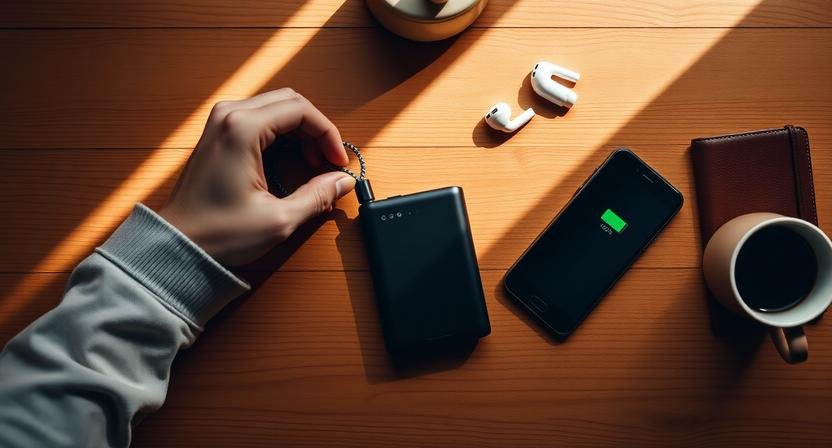
A portable charger, commonly called a power bank, is a compact external battery that stores electrical energy to charge electronic devices like smartphones, tablets, earbuds, and even laptops when you are away from wall outlets. People search for portable chargers because modern devices often run out of battery before the day ends, and finding an available wall plug is not always possible. Whether you are traveling, commuting, or simply spending a long day outside, a reliable power bank keeps your gadgets powered and ensures you stay connected when it matters most.
What Is a Portable Charger?
A portable charger is essentially a rechargeable battery pack with built-in circuitry that controls how power is stored and delivered. Inside these devices are lithium-ion or lithium-polymer cells that hold energy. When you connect your phone or tablet through a USB cable, the charger transfers that stored power to your device in a safe and controlled manner. Most portable chargers connect via USB-A or USB-C ports, while newer models support wireless charging for added convenience. They come in many shapes and sizes, from small pocket-friendly units to larger high-capacity bricks that can charge laptops multiple times over.
Why People Need a Portable Charger
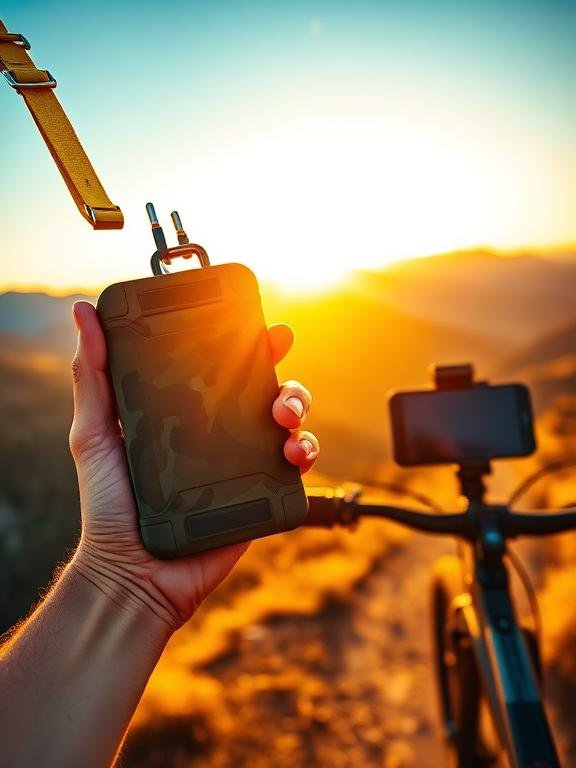
Battery anxiety is real. Your phone dies at the worst possible moments, right when you need GPS in an unfamiliar city, during an important call, or when you are stuck at a gate during flight delays. This is exactly why portable chargers have become essential accessories for millions of people.
Modern smartphones pack powerful processors and bright displays, but these features drain battery quickly. A single day of heavy usage, including navigation, streaming, social media, and photography, can easily kill your battery before dinner time. Moreover, many people carry multiple devices, such as wireless earbuds, smartwatches, and tablets, all of which need regular charging.
Travelers face even greater challenges. Long flights, train journeys, and road trips often lack accessible power outlets. When you are on vacation or a business trip, your phone serves as your camera, map, ticket, and communication tool, so keeping it charged is not just convenient but necessary. Outdoor enthusiasts who hike, camp, or spend time in remote areas also rely heavily on portable power to stay safe and connected.
In addition, the shift toward remote work and digital nomad lifestyles means people increasingly depend on their devices for productivity. A portable charger can be the difference between meeting a deadline and losing hours of work due to a dead laptop battery.
Key Features Breakdown
Understanding what makes a good portable charger helps you choose the right one for your needs. Here are the most important features to look for.
Battery Capacity (mAh)
Capacity is measured in milliamp hours (mAh). This number tells you how much power the charger holds. Higher capacity means more charges for your devices. For reference, a 5,000mAh charger typically provides one full phone charge, a 10,000mAh unit gives two to three charges, and a 20,000mAh battery can charge two phones twice or a phone twice and a tablet once. However, the actual usable capacity is usually around 60 to 70 percent of the rated capacity due to energy loss during transfer.
Charging Speed (Wattage)
Charging speed depends on the output power, measured in watts (W). A charger with higher wattage can power up your device much faster. For smartphones, 20W to 30W is optimal for fast charging. Some advanced power banks deliver 45W, 65W, or even 100W, which is enough to charge laptops and other power-hungry devices. Look for models that support Power Delivery (PD) or Quick Charge (QC) protocols for the fastest speeds.
Number and Type of Ports
Modern portable chargers typically include USB-C ports, which have become the universal standard. USB-A ports are still useful for older devices and accessories. Some chargers feature built-in cables, eliminating the need to carry separate wires. If you frequently charge multiple devices simultaneously, choose a charger with multiple ports.
Portability and Design
Size and weight matter, especially if you carry your charger daily. Slim, lightweight models are better for everyday use, while larger units with higher capacity are more suitable for extended trips. Some chargers feature sleek designs, rounded edges, and premium finishes that feel more like lifestyle accessories than utilitarian gadgets.
Safety Features
Reputable brands include multiple safety protections to prevent overcharging, overheating, and short circuits. Look for chargers with temperature control, surge protection, and certified reliability.
Extra Features
Many modern power banks include useful extras like digital displays showing exact battery percentage, built-in kickstands for hands-free viewing, and wireless charging pads for cable-free convenience.
Real-Life Benefits
Owning a good portable charger transforms your daily experience in several meaningful ways.
First, you never have to hunt for an outlet again. Whether you are at a crowded coffee shop, an airport terminal, or a park, your charger provides instant power wherever you are. This freedom reduces stress and allows you to use your devices without constantly checking the battery indicator.
Second, you can share power with others. When a friend or family member has a dying phone, your portable charger becomes a lifesaver. Charging multiple devices simultaneously is possible with models that have multiple ports.
Third, portable chargers save you money in the long run. Instead of buying expensive replacement cables at airport gift shops or paying for overpriced charging stations, you have your own reliable power source. Moreover, keeping your devices charged extends their battery lifespan by preventing deep discharges that can damage lithium-ion cells over time.
Fourth, they enhance productivity. For remote workers and digital nomads, a high-capacity power bank can keep a laptop running for hours longer, allowing work to continue even when outlets are scarce.
Finally, portable chargers provide peace of mind. Knowing you have backup power eliminates the anxiety of watching your battery percentage drop during critical moments.
Step-by-Step Usage Guide for Portable Chargers
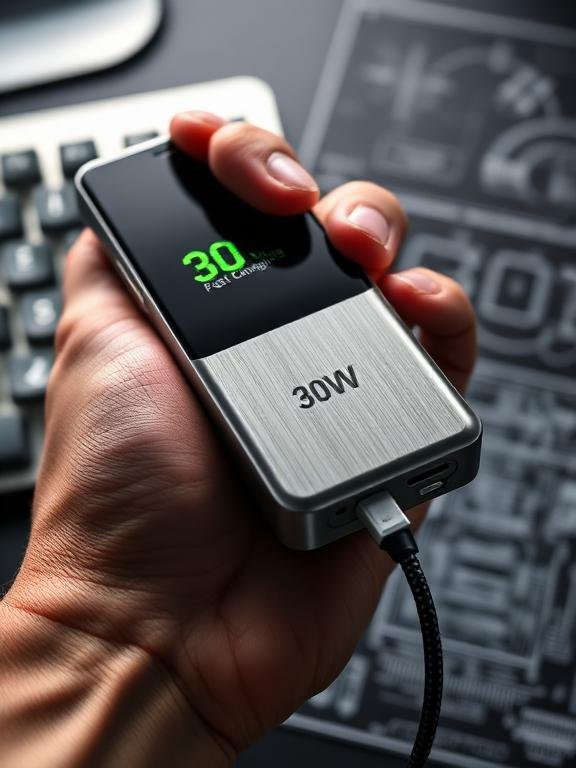
Using a portable charger correctly ensures optimal performance and longevity. Follow these steps for the best experience.
Step 1: Charge the power bank before first use. When you buy a new portable charger, it usually comes with some pre-charged power, but it is best to fully charge it before using it for the first time. Connect it to a wall adapter using the provided cable and let it charge until the indicator shows 100 percent.
Step 2: Check the capacity and plan your usage. Understand how many charges your power bank can provide for your specific device. For example, a 10,000mAh charger typically gives about two full charges for most smartphones. If you are going on a long trip, consider a higher capacity model.
Step 3: Connect your device properly. Use a high-quality charging cable that matches your device’s port type. Plug one end into the power bank’s output port and the other into your phone, tablet, or other gadget. Make sure the connection is secure.
Step 4: Monitor the charging process. Most power banks have LED indicators or digital displays that show remaining battery levels. Keep an eye on these to know when your device is fully charged and to track how much power the bank has left.
Step 5: Disconnect when charging is complete. Once your device reaches full battery, unplug it to save power and prevent unnecessary wear on both the device and the charger.
Step 6: Recharge the power bank after use. After using your portable charger, plug it back into a wall outlet to recharge it for the next use. Regular recharging keeps it ready whenever you need it.
Step 7: Store it properly. When not in use, store your power bank in a cool, dry place away from direct sunlight and extreme temperatures. Avoid leaving it completely drained for extended periods, as this can reduce battery life.
Step 8: Follow airline regulations. If you travel by air, remember that most airlines allow power banks under 100Wh (roughly 27,000mAh) in carry-on luggage only. Always check with your airline before flying.
Best Product Recommendations
After researching and comparing the top portable chargers available in 2026, here are five excellent options for different needs and budgets.
1. Anker Nano Power Bank 10,000mAh 30W with Built-In USB-C Cable
This compact charger from Anker is perfect for users who want a simple, clutter-free setup. It features a built-in USB-C cable, so you never have to worry about forgetting or losing your charging wire. The 30W output delivers fast charging for smartphones and small tablets, and the 10,000mAh capacity provides about two full charges for most phones. Its slim design slips easily into pockets and bags. This is ideal for everyday commuters and casual users who prioritize convenience.
2. INIU Pocket Rocket P50
The INIU Pocket Rocket P50 stands out for its ultra-compact size and impressive 45W fast charging capability. Weighing just 160 grams, it is one of the smallest 10,000mAh chargers on the market. It supports Samsung Super Fast Charging 2.0 and can power a smartphone to 70 percent in around 25 minutes. The built-in lanyard doubles as a charging cable, and the LCD screen shows exact battery levels. This charger is best for travelers and students who need high speed in a tiny package.
3. Anker Prime 20,000mAh Power Bank
For users who need serious power, the Anker Prime 20,000mAh delivers outstanding performance. It features a handy screen with a menu system, awesome power output, and fast charging when paired with a 100W adapter. The high capacity can charge two phones twice or a phone twice and a tablet once. It is more expensive than basic models, but the versatility and reliability make it worthwhile for power users. This is most suitable for professionals, frequent travelers, and anyone who needs to charge laptops or multiple devices simultaneously.
4. Anker MagGo Power Bank 10K
This Qi2-certified power bank is designed specifically for iPhone users who love MagSafe convenience. It magnetically snaps onto compatible iPhones for up to 15W wireless charging. Qi2 certification has enhanced wireless charging speed, allowing an iPhone 15 to reach half charge in under 45 minutes. An LCD display shows battery percentage and charge time, while a sturdy kickstand adds convenience for hands-free video watching. This charger is best for iPhone users who value wireless ease and modern design.
5. Ugreen Nexode 100W 20000mAh Power Bank
The Ugreen Nexode offers impressive 100W charging power, making it capable of fast-charging laptops and other high-draw devices. Its convenient shape and size make it portable despite the large capacity. Solid efficiency ensures you get the most out of every charge. This charger is ideal for professionals who need to power laptops, tablets, and phones all from one device.
Comparison Table
| Product | Price Level | Key Feature Highlight | Best Use Case | Who It Is Best For |
|---|---|---|---|---|
| Anker Nano Power Bank 10K | Mid | Built-in USB-C cable, 30W output | Everyday carry, commuting | Casual users who want simplicity |
| INIU Pocket Rocket P50 | Low-Mid | World’s smallest 10K charger, 45W speed | Travel, fast top-ups | Students and frequent travelers |
| Anker Prime 20,000mAh | High | 100W input, screen, huge capacity | Multi-device charging, laptops | Professionals and power users |
| Anker MagGo Power Bank 10K | Mid-High | Qi2 wireless MagSafe, kickstand | iPhone wireless charging | iPhone users who love MagSafe |
| Ugreen Nexode 100W 20K | High | 100W output, laptop charging | Laptop and heavy device charging | Digital nomads and business users |
Buying Guide – What to Check Before Purchase
Choosing the right portable charger can feel overwhelming with so many options available. Here is a simple checklist to help you make the best decision.
Capacity needs. Think about how many devices you carry and how often you can recharge. For daily use, 10,000mAh is usually enough. For weekend trips or heavy usage, consider 20,000mAh or more.
Charging speed. Check the output wattage. Higher numbers mean faster charging. If you have a newer smartphone that supports fast charging, choose a power bank that matches your device’s capabilities.
Port compatibility. Ensure the charger has the right ports for your devices. USB-C is the modern standard, but USB-A is still useful for older accessories.
Size and weight. Consider how you will carry the charger. Slim, lightweight models are better for daily pocket carry, while larger units may be better for bags and travel.
Brand reputation. Stick with established manufacturers like Anker, INIU, Belkin, and Ugreen. They offer better quality control, safety features, and customer support.
Safety certifications. Look for chargers with built-in protections against overcharging, overheating, and short circuits.
Extra features. Decide if you want wireless charging, digital displays, built-in cables, or kickstands. These extras can add convenience but may increase the price.
Price. Portable chargers range from under $20 to over $100. Determine your budget and prioritize the features that matter most to you.
Who Should Buy vs Who Should Avoid

Buy a portable charger if:
- Your phone battery regularly dies before the end of the day
- You travel frequently for work or leisure
- You work remotely or spend long hours away from outlets
- You use power-hungry apps like GPS, streaming, or gaming
- You carry multiple devices like earbuds, tablets, or smartwatches
- You want peace of mind and freedom from battery anxiety
Avoid a portable charger if:
- You are always near power outlets and rarely need backup power
- You prefer carrying minimal accessories and can manage with wall chargers
- Your devices have exceptionally long battery life that lasts all day
- You are on a very tight budget and cannot afford a quality unit
Even if you do not fit the “buy” category perfectly, having a small emergency charger can still be a wise investment for unexpected situations.
FAQ Section
How long does a portable charger last?
The lifespan of a portable charger depends on usage and care. Most quality power banks last for 300 to 500 charge cycles before their capacity starts to degrade significantly. With proper storage and regular use, a good charger can serve you for two to three years or more.
Can I take a portable charger on a plane?
Yes, you can take portable chargers on planes, but there are restrictions. Most airlines allow power banks under 100Wh (roughly 27,000mAh) in carry-on luggage only. Never pack power banks in checked baggage. Always check with your specific airline before traveling.
What is the difference between mAh and Wh?
mAh (milliamp hours) measures the battery’s charge capacity, while Wh (watt hours) measures total energy. Wh is calculated by multiplying mAh by voltage and dividing by 1,000. Airlines use Wh for restrictions, so knowing both numbers is helpful for travel.
How do I know if a portable charger is safe?
Look for reputable brands with built-in safety features like overcharge protection, temperature control, and short-circuit prevention. Check for certifications from recognized testing organizations. Reading professional reviews and user feedback also helps identify reliable models.
Can a portable charger damage my phone?
A quality portable charger from a trusted brand will not damage your phone. These chargers include smart circuitry that regulates voltage and current to match your device’s requirements. However, cheap, uncertified chargers may lack these protections and could potentially harm your devices. Always invest in reputable brands.
Conclusion
A portable charger is more than just a backup battery, it is a reliable companion that keeps you connected, productive, and stress-free throughout your day. Whether you choose a compact model like the INIU Pocket Rocket P50 for ultimate portability, a convenient option like the Anker Nano Power Bank with its built-in cable, or a high-capacity powerhouse like the Anker Prime 20,000mAh for charging laptops and multiple devices, there is a perfect power bank for every lifestyle.
Before making your purchase, consider your capacity needs, charging speed requirements, port preferences, and budget. Remember that investing in a quality portable charger from a reputable brand ensures safety, reliability, and long-term value.
Do not wait until your phone battery hits single digits to wish you had a backup. Choose the right portable charger today and enjoy the freedom of staying powered up wherever life takes you.
Read More ON Tech Do Action

Haseeb Ur Rehman Lali is the lead technical author at TechDoAction, known for decoding the latest advancements in Artificial Intelligence and Software and Security Solutions for a global audience. His research-driven articles on AI frameworks and software solutions remain some of the site’s most trusted resources. He also leads Tech Gift Guides, applying the same research-first approach to help readers find gear worth packing or gifting. His mission stays the same: turn complex choices into clear, practical knowledge readers can use immediately.